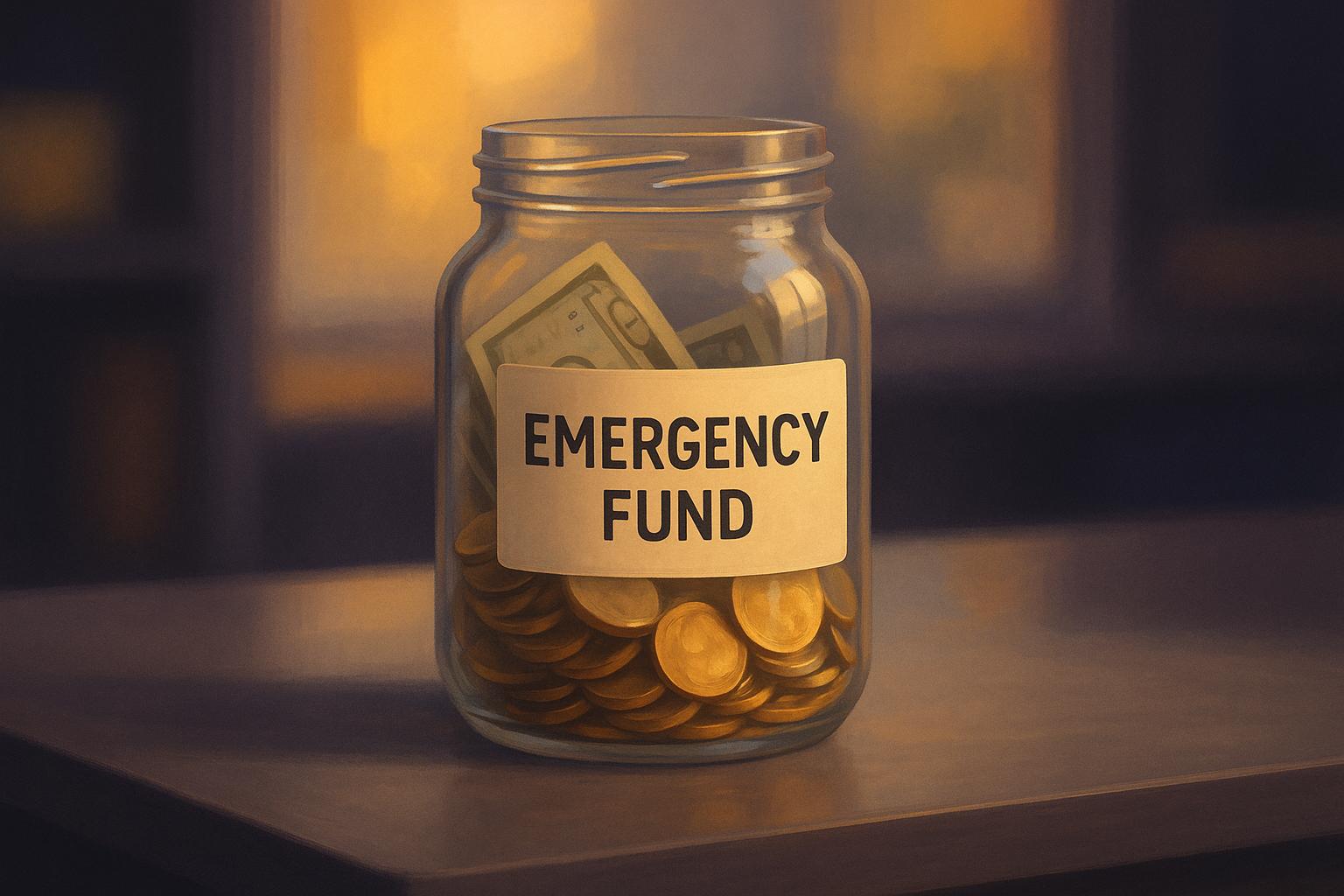
An emergency fund is a must-have for anyone looking to manage unexpected expenses without derailing their financial goals. It’s not a matter of if emergencies will happen, but when. Here’s why having one is essential:
- Avoid Debt: Without savings, you might rely on high-interest credit cards or loans to cover surprises like medical bills or car repairs.
- Protect Investments: Selling investments during a downturn to cover costs can hurt long-term financial growth. A cash reserve prevents this.
- Peace of Mind: Knowing you’re prepared for the unexpected reduces financial stress and helps you make better decisions.
How Much Should You Save?
- Aim for 3–6 months of living expenses.
- Adjust based on your job stability, health needs, family responsibilities, debt, and cost of living.
Starting Tips:
- Open a high-yield savings account for easy access.
- Automate small, regular deposits - start with as little as $20 per paycheck.
- Review your savings regularly to ensure it meets your evolving needs.
Building an emergency fund may feel slow, but even modest savings can make a big difference. Tools like Mezzi can simplify the process by helping you track, plan, and balance your savings with other financial goals.
Ep - 1 What is an Emergency Fund? | How to build it? | Personal Finance for Beginners
Why You Need an Emergency Fund
An emergency fund acts as a financial safety net, sparing you from making costly decisions when life throws you a curveball. But its importance goes far beyond just having extra cash on hand. Here’s why having one is non-negotiable.
Avoiding High-Interest Debt
Without a financial cushion, unexpected expenses can push you into relying on high-interest borrowing options. Credit cards, personal loans, and payday advances often come with steep interest rates, turning a short-term problem into a long-term financial headache. For instance, covering emergencies with a credit card can quickly rack up interest charges. A recent Bankrate report highlights that 33% of Americans have more credit card debt than emergency savings, and 13% have neither credit card debt nor an emergency fund. Even setting aside a modest amount - say $25 to $50 per month - can help you avoid these high-cost borrowing options when surprise expenses arise.
Protecting Your Investment Portfolio
Your investment portfolio is meant to serve long-term goals, like securing your retirement or buying a home. Without an emergency fund, you might be forced to dip into your investments to cover sudden expenses, often at the worst possible time. This could mean selling assets during a market downturn, triggering losses, penalties, or additional taxes. An emergency fund shields your investments, allowing them to grow undisturbed through portfolio diversification while you handle short-term challenges.
Reducing Financial Stress
The benefits of an emergency fund aren’t just financial - they’re emotional too. Knowing you have money set aside for life’s surprises can significantly ease financial stress. Whether it’s an unexpected medical bill or a car repair, having that safety net allows you to face the situation with confidence. This peace of mind not only helps you make clearer decisions but also contributes to overall stability and well-being.
How Much Should You Save?
Now that you understand the importance of an emergency fund, the next step is figuring out how much you need to set aside. The size of your emergency fund should align with your personal circumstances and financial needs.
Standard Guidelines
A common rule of thumb is to save three to six months' worth of living expenses. This range is widely recommended because it strikes a balance: it’s enough to handle most emergencies without tying up money that could otherwise be invested for growth.
Research shows that having at least $2,000 in emergency savings can improve financial well-being by 21%. Expanding that to three to six months of expenses can add another 13% boost. These figures highlight how even modest savings can significantly enhance your ability to handle unexpected financial challenges.
That said, your personal situation might call for adjustments to this standard range.
Factors That Affect Your Target Amount
Your ideal emergency fund depends on factors like job stability, health needs, family responsibilities, debt, and local living costs. Here's how these elements can influence your savings goal:
- Job Security: If you have a stable job with consistent income, you may need a smaller fund. Those in less secure industries or with irregular income - like freelancers or contractors - should aim for a larger cushion.
- Health Needs: People with ongoing medical conditions or limited health insurance should save more to cover potential healthcare costs. Even with insurance, unexpected medical bills can add up quickly.
- Family Responsibilities: If you’re supporting children, elderly parents, or other dependents, your emergency fund should account for their needs during tough times.
- Debt Levels: High debt can increase the need for a larger fund to handle unexpected expenses and provide a safety net against income disruptions.
- Location: Living in a high-cost area means higher expenses for housing, transportation, and essentials, so your savings should reflect that reality.
Taking these factors into account ensures your emergency fund is tailored to your unique financial situation.
Simple Calculation Method
To calculate your emergency fund, start by totaling your essential monthly expenses. Include costs like rent or mortgage, utilities, groceries, insurance premiums, minimum debt payments, and other non-negotiable bills. Skip discretionary spending like dining out or entertainment - emergencies call for a streamlined budget.
Once you have your monthly total, multiply it by three if you have steady income. If your income is less predictable, aim for six months or more.
It’s worth noting that 27% of American adults have no emergency savings, and 36% would struggle to cover an unexpected $400 expense. Even starting with a modest amount can set you apart from many and provide peace of mind when life throws you a curveball.
How Mezzi Can Help Optimize Your Emergency Fund

Building and managing an emergency fund doesn't have to be a guessing game. Mezzi's AI-powered platform takes the complexity out of the process by offering personalized insights. It helps you maintain enough cash for unexpected expenses while also identifying opportunities to grow your investments over time. This approach ensures your emergency fund not only safeguards your immediate needs but also aligns with your broader financial goals.
A Holistic View of Your Finances
Creating a solid emergency fund starts with understanding your entire financial picture. Mezzi brings all your accounts - like checking, savings, and brokerage - into one clear, consolidated view. By securely connecting to your financial accounts, Mezzi ensures your data stays protected while giving you a comprehensive snapshot of your liquidity.
As one user shared, "I can see all my accounts in consolidated form".
This unified view allows you to see exactly how much cash you have on hand and spot areas where you could optimize your savings for better results.
Tailored Emergency Fund Guidance
Mezzi's AI goes beyond simple calculations. It analyzes your spending patterns and cash flow to recommend a customized emergency fund target. Whether your income is steady or varies from month to month, Mezzi adjusts its recommendations to fit your unique situation. Plus, it tracks your progress and helps you reallocate any surplus funds to ensure your money is working as effectively as possible.
Smart Cash and Investment Strategies
Finding the right balance between keeping enough cash for emergencies and investing for future growth can be tricky. Mezzi simplifies this by providing actionable insights based on real-time account data. It categorizes your funds, distinguishing between low-yield cash reserves and growth-focused investments. This makes it easier to identify gaps in your emergency fund and reallocate excess cash where it’s needed most.
Additionally, Mezzi offers shared account views for partners, making it simple for households to stay on the same page about their overall financial health and goals. With Mezzi, managing your emergency fund becomes a seamless part of your broader financial strategy.
Best Practices for Building Your Emergency Fund
Creating an emergency fund requires a clear plan and consistent effort. Here’s how you can build yours effectively.
Choosing the Right Account
Start by selecting an FDIC-insured high-yield savings account. Look for one that makes it easy to deposit money but requires extra steps to withdraw - this can help curb impulsive spending. For added security, consider opening the account at a bank different from where you keep your primary checking account. Once your account is ready, set up automated deposits to grow your fund without extra effort.
Automating Your Savings
Automating your savings is one of the simplest ways to make steady progress. Schedule automatic transfers from your checking account to your emergency fund on payday. This removes the need to decide each month whether to save, making it as routine as paying bills.
Here are three effective ways to automate your savings:
- Automatic transfers: For example, saving just $20 from each paycheck adds up to $520 a year, plus any interest earned.
- Direct deposit splitting: Many employers allow you to divide your paycheck between multiple accounts, so a portion goes directly into your emergency fund.
- Round-up programs: Services like Quail Creek Bank's "Q-UP Program" round up your debit card purchases to the nearest dollar and transfer the difference into savings.
Small, consistent contributions can add up faster than you think.
Regular Reviews and Adjustments
Once your savings are automated, it’s important to periodically review and adjust your emergency fund as your life changes. This isn’t a “set it and forget it” strategy - your financial needs will evolve, and your savings plan should evolve with them.
Schedule regular check-ins, whether quarterly or annually, to ensure you know how much to save to meet your current needs. Major life changes like starting a new job, getting married, having kids, or buying a home can all impact your expenses and financial risks. Similarly, shifts in income - such as a raise or moving to a less stable industry - may signal the need to reassess your goals.
Conclusion: Yes, You Need an Emergency Fund
The sections above make one thing abundantly clear: having an emergency fund is not optional if you're serious about managing financial risks, protecting your investments, and minimizing stress.
An emergency fund isn't just a "nice-to-have" safety net - it's a cornerstone of a solid financial plan. It shields you from the fallout of unexpected expenses, saving you from resorting to high-interest debt or prematurely cashing out investments, both of which can derail your long-term financial goals.
While the general rule of thumb is to save enough to cover three to six months of living expenses, your specific target should reflect your unique circumstances - factors like job security, income consistency, and family responsibilities.
The best way to start? Automate small, regular contributions. Even setting aside $20 from each paycheck can gradually grow into a meaningful reserve. Automation takes the guesswork out of saving, ensuring it happens consistently without relying on memory or willpower.
For those looking to fine-tune their approach, tools like Mezzi can streamline the process. By consolidating financial data and offering tailored advice, Mezzi helps you strike the right balance between keeping funds accessible for emergencies and allowing them to grow over time without compromising your broader financial objectives.
Keep in mind, your emergency fund is not a one-and-done deal. As your life evolves - whether it's a new job, a growing family, or changing expenses - your fund should evolve too. Regularly reassessing your savings ensures it stays aligned with your needs and continues to be an integral part of your financial strategy.
FAQs
How much should I save in an emergency fund based on my financial situation?
How Much Should You Save in Your Emergency Fund?
Determining the right amount for your emergency fund starts with understanding your personal needs. Begin by calculating your essential monthly expenses - things like housing, utilities, groceries, insurance, and transportation. A common guideline from financial experts suggests aiming to save enough to cover 3 to 6 months of living expenses. However, if your income fluctuates or you face higher risks, such as medical expenses or job insecurity, you might want to aim for 12 months’ worth.
Let’s break it down with an example: if your monthly expenses total $4,300, a 6-month emergency fund would come to $25,800. That might sound daunting, but don’t let the big number discourage you. Start small. Even setting aside a few hundred dollars can provide a cushion for unexpected situations. The most important thing is to build an emergency fund that aligns with your financial situation and lifestyle.
How can I start building an emergency fund if my budget is tight?
Building an emergency fund on a tight budget might seem challenging, but it’s entirely doable with a few practical steps. Start by automating your savings - even if it’s just $10 or $20 a month. Small, consistent contributions can grow over time, and automation ensures you’re prioritizing savings without having to think about it.
Take a closer look at your spending habits. Are there areas where you can trim expenses? Cutting back on things like dining out, streaming services, or other non-essential costs can free up money to funnel directly into your emergency fund. Setting a specific, achievable goal - like saving $1,000 or enough to cover three months of essential bills - can keep you motivated and focused.
You might also find it helpful to use budgeting methods like the envelope system or zero-based budgeting. These tools can help you plan your spending more effectively, ensuring you allocate a portion of your income toward savings while still covering your other financial needs. Small adjustments and smart planning can make a big difference over time.
How often should I update my emergency fund to reflect changes in my finances?
It's wise to check in on your emergency fund at least once a year - or anytime your financial situation takes a significant turn. For instance, landing a new job, facing a big jump in expenses, or revisiting your financial goals are all good reasons to reassess. These regular reviews ensure your fund stays in line with your needs, covering three to six months of essential living expenses.
By keeping your fund up to date, you’ll have a safety net that matches your lifestyle and offers reassurance when life throws curveballs.
Related Blog Posts
Table of Contents
Book Free Consultation
Walk through Mezzi with our team, review your current situation, and ask any questions you may have.