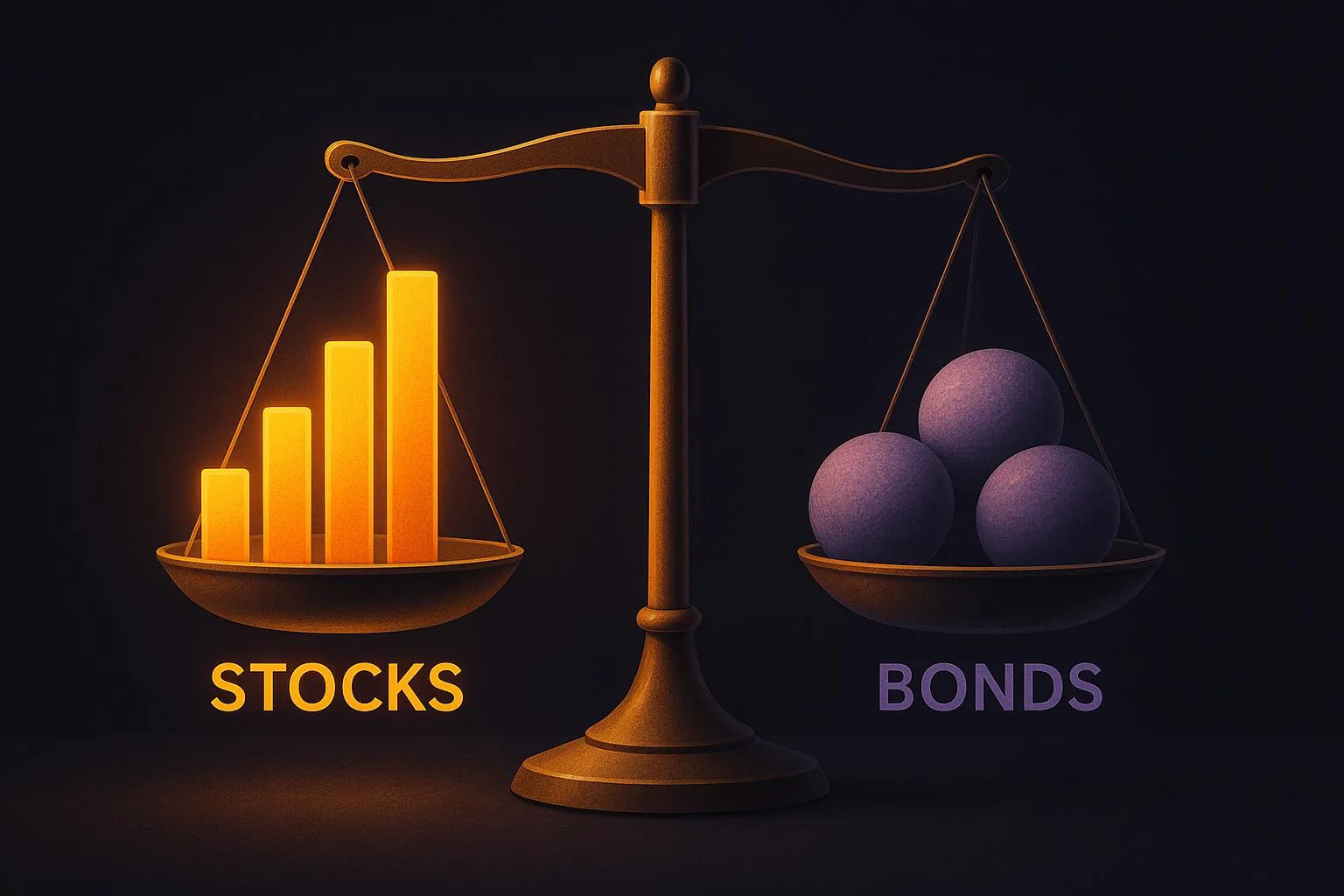
Finding the right investment mix is about balancing risk and returns while spreading your money across different asset classes. Diversification helps reduce risk by ensuring no single investment dominates your portfolio. Here's the key takeaway:
- Diversification works best when you combine stocks, bonds, and alternatives. Stocks drive growth, bonds provide stability, and alternatives (like real estate or commodities) act as buffers during market swings.
- Your mix depends on your goals, risk tolerance, and timeline. For example:
- Long-term growth? Focus on stocks (70-80%) with some bonds.
- Nearing retirement? Shift to a safer mix, like 50% stocks and 50% bonds.
- Need steady income? Prioritize bonds and dividend-paying stocks.
AI tools like Mezzi simplify this process by analyzing your portfolio, spotting risks (like overexposure to one sector), and suggesting tax-efficient strategies. Whether you're saving for retirement, building wealth, or generating income, the key is to diversify wisely and adjust as your goals evolve.
Diversification Strategies & Portfolio Examples | How To Lower Risk & Properly Diversify Investments
Understanding Your Investment Profile: Goals, Risk, and Timeline
Your financial profile - comprising your goals, risk tolerance, and timeline - guides every decision you make about your portfolio.
Setting Your Financial Goals
The first step is identifying your main financial objective. Are you aiming to save $50,000 for a down payment? Building a $2 million retirement fund? Or perhaps you're focused on generating steady income? Each goal requires a tailored approach to asset allocation and risk.
Think about the specific dollar amounts tied to your goals. For instance, saving $50,000 for a home down payment typically calls for a conservative strategy, prioritizing stability and liquidity. On the other hand, a $2 million retirement goal, spread over several decades, can afford more risk and volatility in exchange for higher potential returns.
If you’re juggling multiple goals, you’ll likely need distinct investment strategies for each. A conservative portfolio might work for short-term needs, while a more aggressive one could be ideal for long-term retirement savings. This way, you can address each goal effectively without resorting to a one-size-fits-all approach.
Once your goals are clear, the next step is to evaluate how much risk you’re comfortable with and how your timeline impacts your decisions.
Assessing Risk Tolerance and Time Horizon
Risk tolerance measures your ability - both financially and emotionally - to handle market fluctuations. For example, a 25-year-old with a steady income and decades to invest can likely ride out market dips, while someone nearing retirement might need to prioritize preserving their savings.
Your time horizon is equally important. Investments held for 20 years or more can usually include a higher proportion of stocks, as there’s ample time to recover from downturns. But if your timeline is closer to 3-5 years, a more cautious approach with bonds or cash equivalents may be wiser.
Other factors, like income stability, also play a role. A government employee with a secure paycheck might tolerate more volatility than a freelancer with unpredictable earnings. Similarly, life circumstances - such as supporting aging parents, saving for your kids’ education, or managing health-related expenses - can influence how much risk you’re willing to take. As your situation evolves, it’s important to revisit and adjust your risk profile.
With these elements defined, Mezzi’s AI takes your profile and digs deeper to create a personalized investment analysis.
How Mezzi Analyzes Your Investment Profile
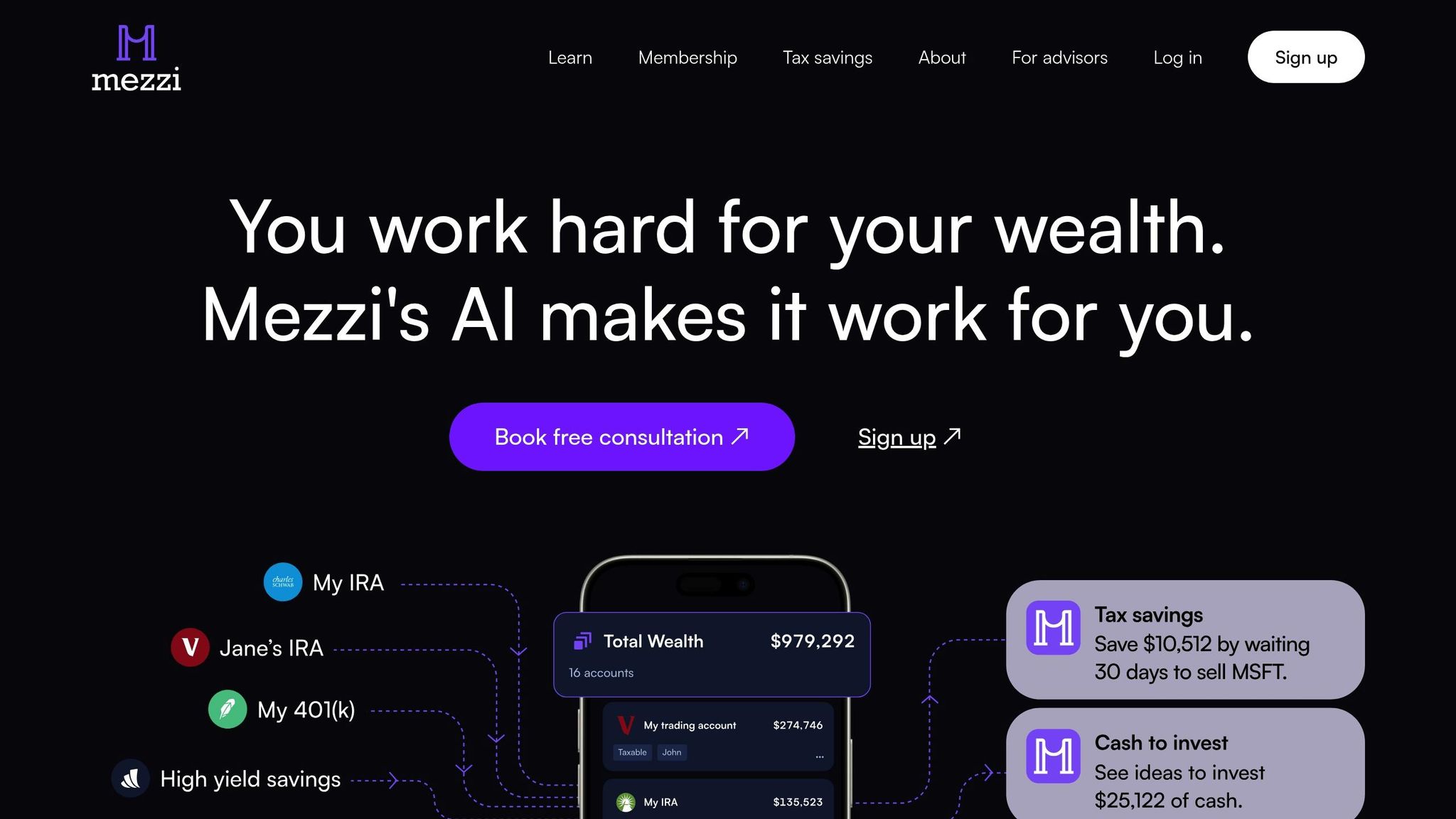
Mezzi’s AI goes beyond basic questionnaires to provide a detailed, personalized breakdown of your financial situation. It evaluates your actual investment behavior and portfolio composition to ensure alignment with your goals and risk tolerance.
By linking all your accounts, Mezzi offers a holistic view of your portfolio. This comprehensive approach often uncovers mismatches - like overexposure to certain asset classes - that you might miss when reviewing accounts individually.
Mezzi’s tools include a calculator that factors in your portfolio value, contribution capacity, and fees to project your progress toward your goals. Unlike generic assumptions, this analysis is grounded in realistic scenarios, offering guidance that’s more relevant to your unique situation.
The platform’s X-Ray feature is particularly useful for identifying hidden risks. For example, it might flag an over-concentration in growth stocks that could make your portfolio riskier than you intended.
Additionally, Mezzi uses real-time AI prompts to monitor your portfolio. If market shifts or new investments cause your allocation to stray from your target, Mezzi alerts you and suggests specific adjustments to keep you on track.
Tax efficiency is another area where Mezzi excels. The AI takes into account your tax situation, the types of accounts you hold, and your investment timeline to recommend strategies that maximize after-tax returns. As your portfolio grows, minimizing taxes becomes a bigger priority, and Mezzi adjusts its recommendations to reflect this.
Main Asset Classes and Their Diversification Benefits
Spreading your investments across different asset classes can help protect your portfolio from the unpredictable swings of the market. Each asset class brings its own strengths to the table. Stocks, for instance, offer the potential for growth but can be more volatile. Bonds, on the other hand, provide steadier returns and income. Then there are alternatives like real estate and commodities, which often act as a buffer against inflation.
The key is understanding how these assets interact. During turbulent markets, stocks might take a hit, while bonds often act as a safety net. With the help of modern tools like AI, you can fine-tune the balance between these asset classes to maximize both diversification and returns. Let’s break down how stocks, bonds, and alternatives each play their part in building a well-rounded portfolio.
Stocks: U.S. and International
Stocks are a cornerstone of long-term wealth building, offering ownership in companies and the potential for substantial returns over time. Broad market indices have shown strong performance historically, making equities an essential part of most portfolios.
- U.S. Large-Cap Stocks: These stocks, including companies like Apple, Microsoft, and Amazon, are the backbone of many portfolios. They provide a mix of stability and growth, benefiting from the strength of the U.S. economy. While less volatile than smaller companies, they still offer solid growth potential.
- Small-Cap Stocks: These represent smaller companies and come with higher growth potential, though they can be more volatile. They add a dynamic element to your portfolio.
- International Developed Markets: Investing in regions like Europe and Japan adds geographic diversity. These markets don’t always mirror U.S. performance, which can help smooth out overall portfolio volatility. At times, they’ve even outperformed U.S. markets during challenging periods.
- Emerging Markets: These stocks tap into the rapid growth of developing economies. While they can be more unpredictable, they’ve delivered strong returns during periods of economic expansion.
Finding the right mix between U.S. and international stocks, as well as balancing large-cap, small-cap, developed, and emerging markets, depends on your risk tolerance and long-term goals.
Bonds and Fixed Income Options
Bonds bring balance to a portfolio by offering predictable income and reducing risk during stock market downturns. Essentially, they’re loans to governments or corporations, and bondholders receive regular interest payments in return.
- U.S. Treasury Bonds: Known for their reliability, these bonds are backed by the U.S. government and are a go-to option during uncertain times. They help reduce overall portfolio risk.
- Investment-Grade Corporate Bonds: Issued by established companies, these bonds offer higher yields than Treasuries while maintaining strong credit ratings. They provide steady income without taking on excessive risk.
- High-Yield Bonds: Often referred to as junk bonds, these come with higher default risks but also higher returns. They tend to perform well during periods of economic growth but can falter in downturns.
- International Bonds: These provide exposure to global interest rate environments and currency fluctuations. When the U.S. dollar weakens, international bonds can offer a boost to returns.
- Treasury Inflation-Protected Securities (TIPS): These adjust for inflation, preserving purchasing power during periods of rising prices. They’re a useful tool for combating inflation’s effects on fixed-income investments.
The duration of bonds also matters. Short-term bonds are less sensitive to interest rate changes and tend to be more stable, while long-term bonds offer higher returns but come with greater risk. Together, these options create a safety net for your portfolio.
Cash, Commodities, and Alternative Investments
Beyond stocks and bonds, alternative investments can add another layer of diversification, offering benefits that traditional assets may not.
- Cash and Cash Equivalents: Savings accounts, money market funds, and short-term Treasury bills provide liquidity and stability, though their returns are modest. Recently, high-yield savings accounts have become more appealing with improved rates.
- Real Estate Investment Trusts (REITs): REITs allow you to invest in real estate without directly owning property. They generate income through dividends and have historically delivered competitive returns while diversifying portfolios.
- Commodities: Assets like gold, oil, and agricultural products are often seen as hedges against inflation and currency devaluation. For instance, gold is a popular choice during economic uncertainty.
- Digital Assets: Bitcoin and other cryptocurrencies represent a newer, more volatile asset class. Typically, investors allocate only a small portion of their portfolio to these assets due to their unpredictability.
Alternative investments often move independently of stocks and bonds, which can provide a buffer during tough market conditions. Additionally, tangible assets like real estate and commodities can help protect your purchasing power when inflation rises. Allocating to alternatives should align with your financial goals and risk tolerance, ensuring your portfolio remains resilient across varying economic climates.
sbb-itb-e429e5c
Using AI for Portfolio Building and Optimization
Creating a balanced portfolio requires constant analysis and adjustments, which is where advanced AI tools come into play. Platforms like Mezzi are changing the way individual investors manage their portfolios by offering a streamlined, data-driven approach.
Complete Portfolio Analysis with Account Aggregation
To optimize your portfolio, it’s crucial to have a clear, comprehensive view of your financial landscape. When your investments are scattered across multiple brokerage accounts, 401(k)s, IRAs, and other platforms, understanding your overall asset allocation becomes a challenge.
Mezzi addresses this with account aggregation, bringing all your financial accounts together in one place. By securely connecting your brokerage and retirement accounts, it offers a unified view of your investments. This eliminates the need to juggle multiple apps and logins, making it easier to manage your finances. As Mezzi puts it, this approach allows you to “understand your family's investments in one view and by account.”
Once connected, the AI doesn’t just analyze each account separately - it evaluates your portfolio as a whole. This holistic perspective can uncover whether your holdings are diversified or if you’re unintentionally overexposed to certain sectors, companies, or asset classes. As market fluctuations shift your allocations away from your targets, the system flags these changes and recommends rebalancing actions to help maintain your preferred risk profile. This unified analysis sets the stage for leveraging Mezzi's more advanced features.
Advanced Features: X-Ray and Tax Optimization
One standout feature of Mezzi is its X-Ray tool, which digs deep into your portfolio to uncover hidden exposures. It can reveal stocks or risks you may not have realized were there, helping you refine your diversification strategy and avoid unintended concentrations.
Another area where Mezzi shines is tax optimization. The platform helps you avoid costly wash sales, which occur when you sell a security at a loss and repurchase the same or a similar one within 30 days. Wash sales prevent you from claiming the loss for tax purposes, but Mezzi tracks transactions across all connected accounts and alerts you before a wash sale is triggered. By preserving tax loss harvesting opportunities, this feature can save you significant amounts in taxes and fees, as Mezzi explains: “Save thousands in taxes and fees today.”
Regular Monitoring and Rebalancing
With account aggregation and advanced analytics in place, Mezzi’s AI provides continuous monitoring to keep your portfolio aligned with your goals. It tracks performance, flags allocation drifts, and suggests rebalancing when necessary to maintain your desired risk profile and take advantage of market conditions.
Market volatility can present both risks and opportunities, and Mezzi’s AI is designed to respond quickly. During downturns, it might identify tax loss harvesting opportunities or highlight undervalued investments. In bullish markets, it can signal when growth assets have become overly dominant in your portfolio. The platform also tailors its recommendations to your specific investment timeline and objectives, such as suggesting more conservative moves as retirement nears or encouraging higher equity exposure for younger investors focused on long-term growth.
Sample Portfolio Mixes for Different Investment Goals
Understanding diversification in action can bring clarity to investment strategies. Your portfolio's asset allocation should align with your financial goals, timeline, and risk tolerance. Below are examples of how diversification can translate into practical portfolio strategies.
Mezzi's AI offers customized portfolio suggestions based on your unique needs, ensuring your investments stay on track.
Here’s a look at three common investment scenarios and how a diversified portfolio might be structured for each:
Retirement Savings
For individuals in their 30s or 40s planning for retirement, a typical portfolio might consist of 70% stocks and 30% bonds.
- Stock allocation: Around 50% in U.S. equities, diversified across large-cap growth stocks (like Apple and Microsoft), value stocks in sectors such as financials and energy, and small-cap companies for extra growth potential. The remaining 20% goes to international stocks, balancing developed markets (e.g., Europe and Japan) with emerging markets for higher growth opportunities.
- Bond allocation: The 30% fixed-income portion often includes U.S. Treasury bonds, corporate bonds, and Treasury Inflation-Protected Securities (TIPS) to protect against inflation.
As retirement nears, the portfolio becomes more conservative. For instance, by your early 60s, you might shift to a 50% stocks and 50% bonds mix. Mezzi's AI helps manage this transition by flagging allocation drifts. For example, if a stock market rally pushes your equity exposure to 75%, the platform recommends rebalancing by moving gains into bonds to maintain your desired risk level.
Wealth Building
For those focused on growing wealth over a 10-15 year timeline, a more aggressive approach is often appropriate. A common allocation might be 80% stocks, 20% bonds, and a small portion in alternative investments for added variety.
- Stock allocation: About 45% in U.S. equities, with a focus on growth stocks and technology sectors, 25% in international stocks (both developed and emerging markets), and 10% in Real Estate Investment Trusts (REITs) for diversification and inflation protection.
- Bond and alternatives allocation: The remaining 20% could include high-quality corporate bonds and potentially commodities or precious metals.
This strategy accepts short-term market fluctuations in exchange for long-term growth potential. Mezzi's X-Ray tool is especially useful here, helping identify unintended sector concentrations and ensuring your portfolio remains balanced.
Income Generation
Investors prioritizing steady income and capital preservation often favor a portfolio with 40% stocks and 60% bonds or income-producing assets.
- Stock allocation: Focus on dividend-paying companies such as utilities, consumer staples, and established financial firms. For example, companies like Johnson & Johnson, Coca-Cola, and Verizon are known for consistent dividend payouts. A typical split might be 25% in U.S. dividend stocks and 15% in international dividend stocks.
- Bond allocation: The 60% fixed-income portion emphasizes steady income through government bonds, high-grade corporate bonds, municipal bonds (ideal for high tax brackets), and dividend-focused REITs.
Mezzi's tax optimization tools can help income-focused investors maximize after-tax returns. For instance, it might suggest holding dividend stocks in tax-advantaged accounts while keeping bonds in taxable accounts.
Here’s a quick summary of these portfolio strategies:
| Investment Goal | Stock Allocation | Bond/Fixed Income | Key Focus Areas |
|---|---|---|---|
| Retirement Savings | 70% | 30% | Growth with a gradual shift to stability |
| Wealth Building | 80% | 20% | Maximum growth with managed risk |
| Income Generation | 40% | 60% | Steady cash flow and capital preservation |
These portfolio examples are starting points, not rigid formulas. Your individual risk tolerance, financial situation, and market conditions should guide your final allocation. Mezzi's AI continuously monitors your portfolio, flags when rebalancing is needed, and provides tax-efficient strategies to help you adjust your investments across all accounts.
Conclusion: Building a Strong and High-Performing Portfolio
Creating a high-performing portfolio isn’t about following a universal formula - it’s about crafting a strategy that aligns with your unique goals, risk tolerance, and time horizon. The key lies in balancing diversification with ongoing, thoughtful adjustments.
Diversification is your best shield against market swings. By spreading your investments across U.S. and international stocks, bonds, and alternative assets, you reduce the impact of any single market downturn. But diversification alone isn’t the full picture. The right mix of assets must reflect your personal financial situation and investment objectives.
Once you’ve established a solid diversification plan, advanced technology can take it to the next level. AI-powered tools are reshaping the investment landscape by analyzing massive datasets - financial reports, market trends, news, and even social media - in real time. These insights reveal patterns and opportunities that traditional methods might overlook, helping you anticipate market shifts and adjust proactively rather than reacting after the fact.
Mezzi’s platform enhances investment management by providing a unified view of all your accounts. It continuously monitors for potential issues like wash sales or overconcentration, simplifying complex decisions. Its X-Ray and tax optimization tools further streamline the process, helping you avoid costly mistakes and ensuring your portfolio adapts to changing market conditions.
Whether you lean toward aggressive, balanced, or conservative strategies, the core principles remain the same: diversify wisely, monitor consistently, and use cutting-edge technology to make informed decisions.
As your life evolves, so should your portfolio. AI-driven tools make these transitions smoother, combining time-tested diversification strategies with modern innovations. This approach empowers you to grow your wealth efficiently while managing risks and minimizing taxes. The result? A portfolio that works as hard as you do, giving you greater confidence in your financial future.
FAQs
What’s the best way to balance stocks, bonds, and alternative investments for my financial goals?
To build a well-rounded mix of stocks, bonds, and alternative investments, start by evaluating three key factors: your risk tolerance, time horizon, and financial goals. For instance, if you're a younger investor with decades ahead, you might focus more on stocks to capitalize on growth potential. On the other hand, those closer to retirement often shift toward bonds to prioritize stability and preserve wealth.
One popular approach is the "100 minus your age" rule. This suggests allocating a percentage of your portfolio to stocks based on your age, with the rest going into bonds or other low-risk assets. Of course, this is just a guideline - your specific circumstances, preferences, and goals should ultimately shape your strategy.
Tools powered by AI, like Mezzi, can make this process easier. By analyzing your unique financial profile alongside market trends and historical data, these tools can recommend a tailored asset mix. This ensures your portfolio stays diversified and aligned with your objectives, helping you balance risk and aim for solid returns.
How does AI improve portfolio management, and what benefits does Mezzi provide?
AI plays a crucial role in portfolio management by processing large volumes of data in real time, uncovering patterns, and offering insights that can refine asset allocation and better manage risk. By utilizing machine learning and predictive analytics, it empowers investors to make sharper, more efficient decisions.
Mezzi integrates AI-powered tools to deliver tailored recommendations, perform diversification analysis, and assess historical performance. Tools like the X-Ray tool allow investors to pinpoint opportunities and fine-tune their allocations to match their financial objectives - striking a balance between risk management and return optimization.
How often should I review and adjust my investment portfolio to stay on track with my financial goals?
It's wise to take a close look at your investment portfolio at least once a year, making adjustments if needed. This helps ensure your asset allocation stays in line with your financial goals, risk tolerance, and any changes in your personal situation. Some investors opt for a six-month review, especially during times of market turbulence or significant life events.
By regularly reviewing your portfolio, you can address market shifts, rebalance your investments, and ensure everything aligns with your long-term strategy. The key is consistency - pick a schedule that fits your needs and stick to it.
Related Blog Posts
Table of Contents
Book Free Consultation
Walk through Mezzi with our team, review your current situation, and ask any questions you may have.