If you’re wondering how much to save for emergencies, here’s the short answer: 3 to 6 months of your essential expenses. This means covering basics like rent or mortgage, utilities, groceries, transportation, and healthcare. For those with stable jobs, 3 months may be enough. If your income is irregular or you’re a single parent, aim for 6 months or more.
Why it matters: Without an emergency fund, unexpected expenses - like car repairs or medical bills - can lead to credit card debt or even dipping into retirement savings. A financial cushion prevents stress and keeps your long-term goals intact.
Quick Steps to Calculate:
- Add up your monthly essentials: housing, transportation, groceries, healthcare, and loan payments.
- Multiply by 3–6, depending on your job security and household size.
- Start small if needed, with $1,000 as an initial goal.
Pro Tip:
Use tools like Mezzi to track spending and create a personalized savings plan. It analyzes your financial habits and adjusts your emergency fund target as your life changes - like getting a raise, moving, or having kids.
Having an emergency fund isn’t just about protecting your finances; it’s about peace of mind. Start saving today, even if it’s just a little.
Calculate Your Emergency Fund Amount the Easy Way
Once you have your target, you can calculate your remaining cash need based on your current savings.
How to Calculate Your Emergency Fund Size
Planning your emergency fund doesn't have to be complicated. Here's a straightforward way to figure out how much you need.
The 3-to-6-Month Rule: A Good Starting Point
A common guideline is to save enough to cover 3–6 months of essential living expenses. If you're currently tackling consumer debt, financial experts suggest starting small - with a "starter emergency fund" of $1,000 - before building a larger reserve. This initial amount can help you handle minor setbacks without adding to your debt, allowing you to focus on paying off what you owe.
"An emergency fund turns a financial crisis into an inconvenience." - Rachel Cruze
To set a precise savings goal, you'll need to calculate your monthly essential expenses.
How to Calculate Monthly Expenses
Start by identifying your necessary monthly costs. Break these down into categories to ensure you don't miss anything:
- Housing expenses: Rent or mortgage payments, property taxes, home insurance, and utilities like electricity, gas, and water.
- Transportation costs: Car payments, fuel, public transit fares, car insurance, and routine vehicle maintenance.
- Personal and healthcare expenses: Groceries, basic personal care items, health insurance premiums, and prescription medications.
- Fixed expenses: Loan payments, minimum credit card payments, and essential subscriptions (e.g., internet, phone service).
Add up these amounts to determine your total monthly essential expenses. This number will serve as the foundation for calculating your emergency fund target.
Factors That Affect Your Savings Goal
The right size for your emergency fund depends on your personal circumstances. Consider factors like job security, household size, and income reliability when deciding whether to aim for 3 months, 6 months, or even more.
- Single individuals or dual-income couples: A 3-month fund is often sufficient due to lower financial obligations or the backup of a second income.
- Single parents or single-income households: Aiming for 6 months of expenses is safer, as there's more reliance on a single income source.
- Seasonal or irregular income earners: Those with fluctuating income, like freelancers or commission-based workers, should also aim for 6 months of expenses.
- Households with chronic illnesses: If you or a family member have ongoing medical needs, consider saving for 6 months or more to account for potential healthcare costs.
Here’s a quick summary to guide you:
| Scenario | Target Fund Size | Why It Matters |
|---|---|---|
| Single with no dependents and stable income | 3 months of expenses | Fewer financial responsibilities and steady income |
| Married with both partners earning stable income | 3 months of expenses | Dual income offers a safety net |
| Married with one income earner | 6 months of expenses | Higher dependency on one income increases financial risk |
| Single parent | 6 months of expenses | Being the sole provider means a larger safety net is critical |
| Seasonal or irregular income | 6 months of expenses | Income fluctuations require a bigger cushion |
| Chronically ill household member | 6 months of expenses | Unpredictable medical costs can strain finances |
| Self-employed or commission-based income | 6 months of expenses | Income unpredictability calls for a stronger reserve |
| High-risk professions (e.g., first responders) | 6 months of expenses | Greater risk of injury or burnout necessitates a larger buffer |
Using AI Tools to Build Your Emergency Fund
AI tools are changing the way we approach emergency fund planning, making it easier and more precise than ever. By analyzing your actual spending habits and financial behavior, these tools eliminate the guesswork and help you create a savings plan tailored to your needs.
Analyzing Spending Patterns with AI
Traditional methods for calculating emergency savings often rely on generic rules of thumb. AI tools, however, dig deeper by analyzing your financial data to provide a more accurate picture of what you need. For example, platforms like Mezzi can connect to your bank and credit card accounts to automatically categorize your transactions, separating essential spending from discretionary expenses.
This analysis goes beyond basic expense tracking. AI can uncover patterns you might not notice - like seasonal spikes in utility bills, irregular healthcare costs, or fluctuating freelance income. By reviewing extended transaction histories, these tools can predict future cash flow needs with greater accuracy.
Take someone with inconsistent freelance income: Mezzi might determine that while their average monthly expenses are $3,000, their income varies widely throughout the year. Based on this volatility, the AI might recommend saving $12,000 - four months’ worth of expenses - rather than the traditional three-month target, which might suffice for someone with a steady paycheck.
The system also helps you prioritize. By identifying which expenses are essential and which can be reduced during a financial emergency, AI ensures your emergency fund is focused on covering the basics, not your full lifestyle.
How Mezzi Optimizes Emergency Savings
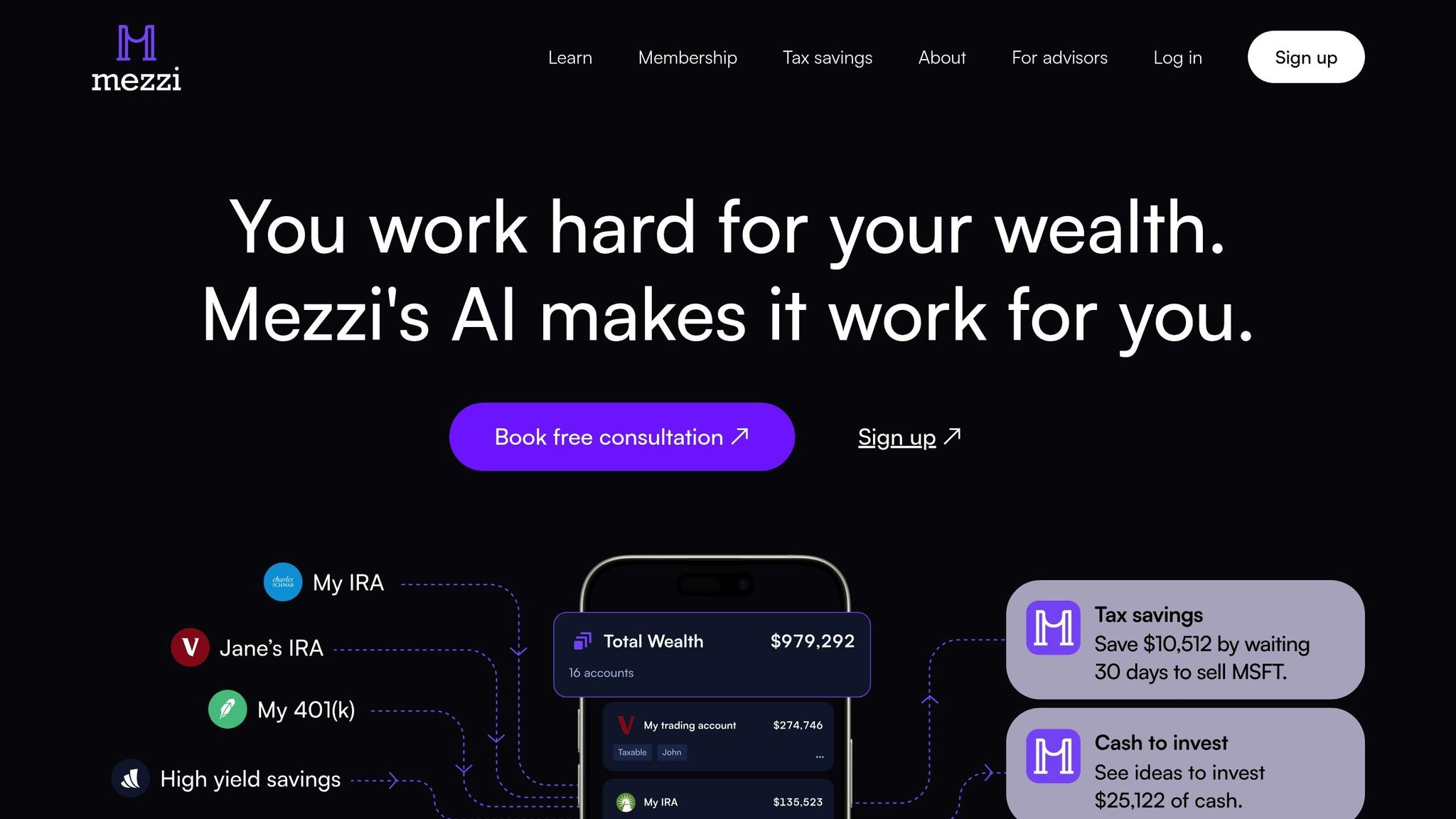
Mezzi takes emergency fund planning a step further by offering real-time, dynamic insights. Unlike static spreadsheets, Mezzi adapts to changes in your financial situation, ensuring your savings strategy stays relevant.
For instance, if Mezzi detects extra cash in your checking account after your monthly expenses are covered, it might suggest transferring that surplus to your emergency fund. It also alerts you to significant life changes - like a new job, a move, or an expanding family - and recalculates your savings target accordingly.
One standout feature is Mezzi’s ability to balance emergency savings with other financial goals. If you’re over-saving in cash and neglecting long-term investments, the platform will flag this imbalance. This helps you strike the right balance between financial security and wealth growth.
Step-by-Step Guide to Building Your Emergency Fund
Getting started with AI-powered savings is straightforward and takes much of the manual effort out of financial planning. Here’s how you can use Mezzi to build your emergency fund:
- Connect your accounts: Securely link your checking, savings, and credit card accounts to Mezzi. This gives the AI a complete view of your finances.
- Review your expense breakdown: Mezzi categorizes your spending into essential and discretionary expenses, providing a clear picture of where your money goes each month. Often, this analysis reveals patterns you hadn’t noticed before.
- Follow the AI-driven savings plan: Mezzi creates a personalized plan based on your income stability, spending habits, and financial goals. It recommends a target emergency fund amount and a monthly savings schedule tailored to your needs.
- Automate your savings: Set up automatic transfers to a high-yield savings account. Mezzi calculates how much you can save without straining your budget, making the process almost effortless.
- Track your progress: Use Mezzi’s dashboard to monitor your savings. The platform adjusts its recommendations as your financial situation changes, keeping your strategy up to date.
Balancing Emergency Savings with Other Financial Goals
Finding the right balance between building an emergency fund and pursuing other financial goals can feel like a juggling act. But with tools like Mezzi, you can ensure you're saving enough for unexpected expenses while still making progress on investing and paying down debt.
The key is to avoid over-saving in cash, which can hold back your long-term financial growth. Once your emergency fund hits a comfortable level, it’s smart to redirect any extra cash toward investments or debt repayment. Let’s explore why striking this balance matters and how too much cash can actually work against you.
The Cost of Saving Too Much Cash
Keeping excess cash in a low-yield account may feel safe, but it can cost you significantly over time. Savings accounts offering 4-5% returns fall short compared to the historical average returns of investments, which hover around 10%. That gap grows even wider when compounded over the years.
Here’s an example: If you hold $50,000 in cash but only need $20,000 for emergencies, the extra $30,000 earns just 4%, growing to around $44,400 in 10 years. However, if that same $30,000 were invested at an 8% return, it could grow to roughly $64,800. That’s a difference of $20,400 - money you’re leaving on the table.
Inflation adds another layer to this equation. Over time, inflation erodes the purchasing power of cash, meaning your oversized emergency fund could actually lose value. Investments in stocks, real estate, or other assets typically outpace inflation, helping your money grow instead of shrink.
And if you’re carrying high-interest debt, like credit card debt at 18%, the stakes are even higher. Holding extra cash in a 4% savings account while paying 18% interest on debt is essentially costing you 14% annually. In this case, paying down debt offers a guaranteed return equal to the interest rate you’re avoiding.
| Scenario | 10-Year Growth on $30,000 | Annual Return |
|---|---|---|
| High-yield savings (4%) | $44,400 | 4% |
| Conservative investment portfolio (6%) | $53,700 | 6% |
| Moderate investment portfolio (8%) | $64,800 | 8% |
| Opportunity cost vs. investing | Up to $20,400 less | 4% difference |
Understanding these opportunity costs can help you make smarter financial decisions and allocate your resources more effectively.
How Mezzi Helps Prioritize Financial Goals
Mezzi simplifies the process of balancing your emergency fund with other financial priorities. By analyzing your entire financial picture, the platform provides tailored recommendations on how to allocate your money between savings, investments, and debt repayment.
For instance, if Mezzi detects you have $40,000 saved but only need $25,000 for emergencies, it might suggest reallocating the extra $15,000 into retirement accounts or investment portfolios. If you have high-interest debt, the platform prioritizes paying that down first. And if you’re behind on retirement savings, Mezzi may recommend maxing out your 401(k) contributions before focusing on additional investments.
One of Mezzi’s strengths is helping you avoid common pitfalls, like halting retirement contributions to speed up emergency fund growth. Instead, it promotes a balanced strategy - one that allows you to keep investing for the future while steadily building your cash reserves. This approach ensures you don’t miss out on valuable opportunities like employer 401(k) matching or the benefits of compounding returns.
What sets Mezzi apart is its dynamic, ongoing optimization. Rather than letting your financial plan stagnate, the platform continuously adjusts your strategy to ensure you’re making progress on multiple goals at once. This way, you’re not sacrificing long-term wealth building for the sake of short-term security. Instead, you’re striking the perfect balance to make your money work harder for you.
When to Adjust Your Emergency Fund
Your emergency fund isn’t a "set it and forget it" kind of thing. Life has a funny way of throwing curveballs, and as your circumstances change, so should your financial safety net. Whether you’re tying the knot, landing a new job, or moving to a pricier city, these shifts can impact how much you need to stash away for those "just in case" moments.
Regularly reassessing your emergency fund ensures it keeps pace with your evolving expenses. This way, you’re not leaving yourself underprepared - or parking too much cash in accounts that aren’t earning much.
When to Review Your Emergency Fund
Big life changes are your cue to take another look at your emergency fund. For example, starting a new job might mean a bigger paycheck - but it could also come with higher expenses, like commuting costs or new work-related fees. Getting married? That’s another game-changer, as combining finances often leads to increased household spending. And, of course, having kids brings its own set of costs, from daycare to medical bills.
"You want to re-evaluate your emergency fund anytime there is a change to your expenses. When your expenses change, so will your emergency fund." – Kendall Meade, Certified Financial Planner, SoFi
Moving to a new city is another reason to reassess. Let’s say you’re used to spending $2,000 a month in a smaller town. Relocating to a bigger, more expensive city could easily push your monthly costs higher, meaning your emergency fund needs to reflect that.
Income changes also play a role. A raise can help you grow your fund faster, while a pay cut might mean adjusting your savings target to something more manageable.
Even smaller changes, like adopting a pet, can nudge your monthly expenses upward over time. That’s why it’s smart to review your spending regularly - monthly, if possible - to keep your emergency fund in sync with your needs.
If manual tracking feels like a hassle, platforms like Mezzi can simplify the process by automatically monitoring your expenses and recalculating your savings goals in real time.
Using Mezzi for Regular Monitoring
While manual reviews are useful, Mezzi takes the guesswork out of maintaining your emergency fund by automating the process. It continuously analyzes your spending habits and sends you updates when it’s time to adjust your savings.
Automatic notifications keep you in the loop without requiring constant effort. You can set up alerts to review your fund balance or check in on your savings progress, especially if you rely on automatic transfers.
Dynamic goal adjustment is another handy feature. If Mezzi notices a slight uptick in your monthly expenses, it recalculates your emergency fund target and suggests tweaks to your savings plan.
Progress tracking is built into the platform, so you’ll always know how close you are to meeting your updated goals. If you dip into your fund, Mezzi offers practical suggestions for rebuilding it, including timelines and contribution amounts.
Continuous optimization ensures your savings strategy evolves alongside your financial situation. If your income changes or your expenses shift, Mezzi can adjust your automatic transfers accordingly. It might even recommend saving beyond your initial goal to create a larger cushion for added peace of mind during uncertain times.
Conclusion: Building Your Financial Safety Net
Creating an emergency fund means crafting a safety net that fits your unique situation. While the classic guideline of saving three to six months of expenses is a helpful starting point, the exact amount you need depends on factors like your job stability, family size, and monthly costs. The key is to start, even if it’s with just $500 - it’s a step in the right direction.
As your life changes, so should your emergency fund. Think of it as a living, breathing part of your financial plan. Whether your income grows, your family expands, or your expenses shift, your savings should adjust accordingly. This isn’t a set-it-and-forget-it task - it’s an ongoing effort. Tools like Mezzi can simplify this process by analyzing your spending habits and suggesting adjustments in real time, making it easier to stay on track.
Striking the right balance is essential. Save too little, and you risk being unprepared; save too much, and you might miss out on opportunities to grow your wealth through investments. AI tools can help you fine-tune your strategy by aligning your savings with your spending patterns and long-term goals.
Start small by setting aside 5–10% of each paycheck. Automating the process through direct deposits into a high-yield savings account can make saving effortless. Pair this with Mezzi’s insights to monitor your progress and refine your approach as needed.
An emergency fund is more than just a financial cushion - it’s the cornerstone of your financial security. With a thoughtful approach and the help of smart tools, you can build a safety net that shields you from unexpected challenges while keeping your long-term goals within reach. By combining disciplined saving with actionable insights, you’re not just preparing for emergencies - you’re laying the groundwork for lasting financial stability and growth.
FAQs
How can I decide if a 3-month emergency fund is enough for me?
The size of your emergency fund hinges on factors like job stability, financial obligations, and the risks tied to your industry. If you have a steady job, additional income streams (perhaps a high-earning partner), or quick access to other savings, a 3-month emergency fund could work just fine.
On the other hand, if you’re the primary earner, employed in an unstable industry, or dealing with unpredictable income, aiming for a 6-month fund is a smarter move. To figure out the right amount, add up your essential monthly expenses - things like rent or mortgage, groceries, and utilities - and multiply that by the number of months you want to cover. This approach ensures your fund is tailored to your unique situation.
How can I start saving for an emergency fund if I’m living paycheck to paycheck?
Starting an emergency fund while living paycheck to paycheck can seem tough, but even small, steady efforts can lead to progress. Start by setting manageable savings goals - for instance, putting aside $10–$20 from each paycheck or saving 5% of your income. To make it easier, automate your savings so it happens without any extra effort.
Take a close look at your spending and find ways to trim unnecessary costs or temporarily increase your income to create some breathing room for savings. Even small changes can add up over time. Opening a high-yield savings account is another smart move, as it allows your money to grow faster while still being easily accessible when emergencies strike. The key is to begin with what you can and stay consistent - think of building your emergency fund as a long-term commitment, not a quick fix.
How do I keep my emergency fund updated as my financial needs change?
To keep your emergency fund in line with your changing financial needs, it's important to review it regularly - especially after major life events like changing jobs, relocating, or growing your family. These shifts can impact your monthly expenses or income, so adjusting your savings goal ensures you're always prepared.
Consistency is key, and automating your contributions can make it easier. Set up recurring transfers to your emergency fund and check in periodically to confirm it still covers 3–6 months of essential expenses. If your costs or financial priorities change, tweak your savings plan to stay on track with your current situation.
Related Blog Posts
Table of Contents
Book Free Consultation
Walk through Mezzi with our team, review your current situation, and ask any questions you may have.