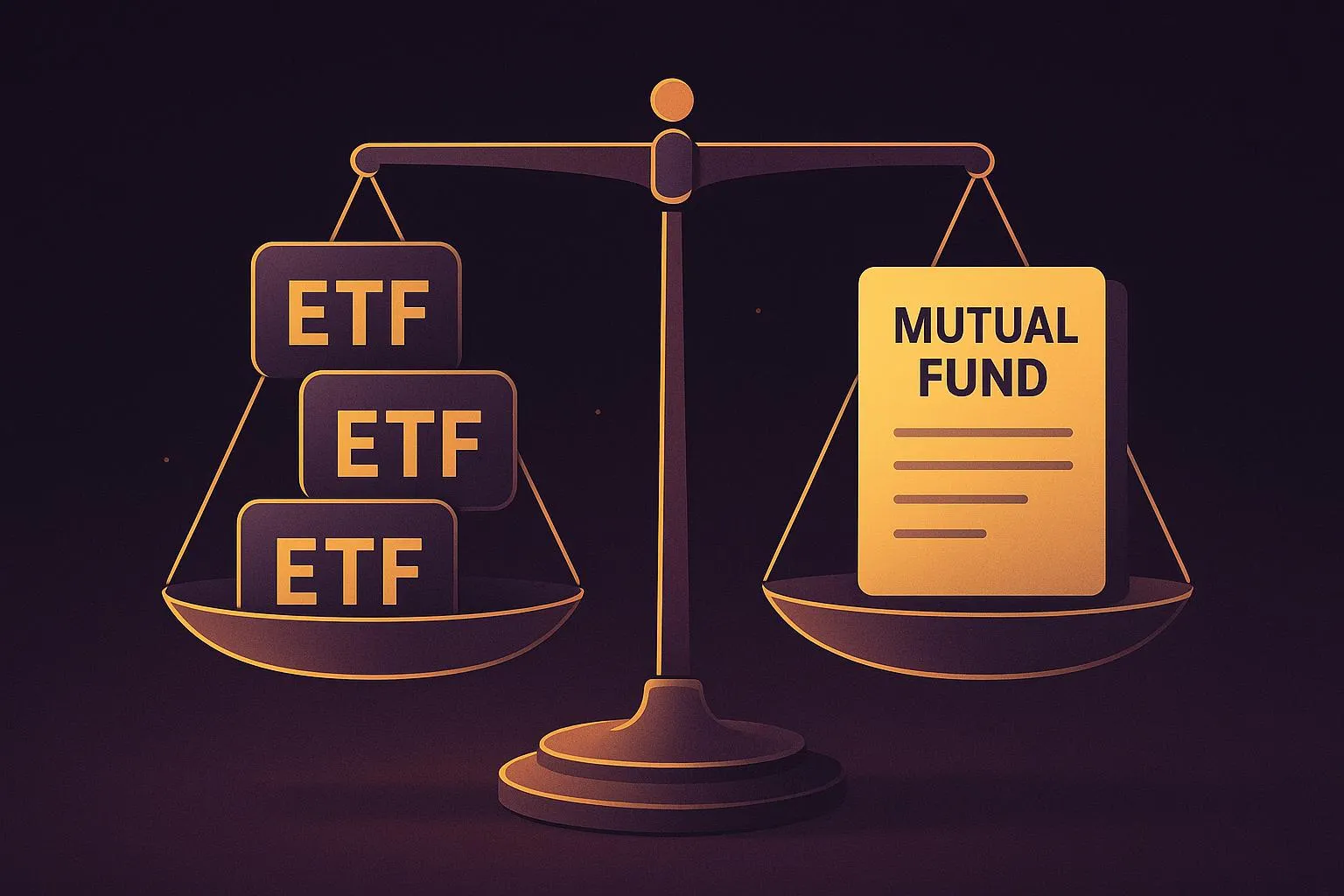
When it comes to investing in NASDAQ-focused options at Vanguard, you have two main choices: ETFs and mutual funds. Both are low-cost, index-based options that provide exposure to tech-heavy NASDAQ investments. Here's a quick rundown of the key differences:
- ETFs: Trade like stocks during the day, offer tax advantages, and have lower minimum investment requirements (you can start with the price of one share, e.g., ~$450 for VGT). They’re ideal for active investors who value flexibility and tax efficiency.
- Mutual Funds: Require a $3,000 minimum investment but allow automatic contributions and dividend reinvestment. They’re best for long-term investors who prefer a hands-off approach.
Quick Takeaways:
- ETFs like Vanguard Information Technology ETF (VGT) and Vanguard Growth ETF (VUG) are great for those seeking flexibility and lower tax costs.
- Mutual Funds like Vanguard Information Technology Index Fund Admiral Shares (VITAX) and Vanguard Growth Index Fund Admiral Shares (VIGAX) simplify investing with automated features and expert management.
Your choice depends on your investment style, account type, and goals. ETFs suit those who want intraday trading and tax efficiency, while mutual funds are better for those prioritizing automation and long-term growth.
Vanguard ETFs for Getting in on NASDAQ
Overview of Vanguard NASDAQ ETFs
Vanguard ETFs give a clear path to tap into NASDAQ's tech-heavy scene. The Vanguard Information Technology ETF (VGT) focuses on big tech firms that drive NASDAQ's moves. It holds top names like Apple, Microsoft, and NVIDIA, working in areas like software and semiconductors.
The Vanguard Growth ETF (VUG) takes a wider look at fast-growing firms across many fields but keeps a strong tech focus. This plan lets investors hit many NASDAQ-listed firms while also mixing in other areas.
Also, the Vanguard Mega Cap Growth ETF (MGK) zooms in on the biggest U.S. growth firms, including key NASDAQ names. With MGK, you get into top tech and innovation players, showing NASDAQ's tech tilt.
Why Pick NASDAQ Focus ETFs?
NASDAQ-specific ETFs have perks for investors:
- In-Day Trade Flex: Unlike mutual funds, you can trade ETFs all day, so they're great when the market's unstable.
- Tax Gains: ETFs use a process that can cut down on the tax hits from profits, a win for those with taxable accounts.
- Low Start Costs: ETFs ask for less money to start than other choices, making them open to more investors wanting to spread their bets.
Who Should Think About ETFs?
ETFs are right for those who like cost-effective choices and flexibility. If you want to change your bets as the market moves, trading ETFs all day helps.
For those who need to keep tax costs down, especially in taxable accounts, ETFs can help cut tax bills. They also have low fees, good for those watching their costs as even small fee cuts can add up over time.
Folks who want to handle their bets may also like ETFs. This choice might need tasks like putting money back from payouts, but it's a clear, cheap way to match up with NASDAQ's movement. Next, we'll look at Vanguard's NASDAQ-tied mutual funds for more investment choices.
Vanguard Funds for NASDAQ-Like Focus
A Look at Vanguard Funds Close to NASDAQ
Vanguard does not have a fund that tracks the NASDAQ straight on, but they have options that match up well with NASDAQ's tech-focused theme. The standout is the Vanguard Information Technology Index Fund Admiral Shares (VITAX). This fund is a lot like the ETF VGT, holding many big tech firms that push NASDAQ's scores up.
You can also look at the Vanguard Growth Index Fund Admiral Shares (VIGAX). It's a bit wider in its reach but still has a lot of the key tech names you see in NASDAQ. This fund takes in a mix of fast-growing firms from different areas, making it a good pick for those who want a tech-led fund with some variety.
Why Choose NASDAQ-Tied Mutual Funds
These funds do more than just follow NASDAQ's path - they offer a few key perks for long-term savers:
- No-fuss dividend gains: Earned dividends are put right back into the fund, helping your money grow over years.
- Run by experts: Skilled pros manage the buying and selling, so you don't have to keep a daily watch.
- Smoothed-out spending: Regular money adds soften the blow of market ups and downs, giving a more even way to put your money in.
- Easy to start: With the $3,000 start point for Vanguard's top funds, you can get in without a big payment upfront.
All these points make mutual funds a smart, hassle-free choice for those wanting ongoing, long-term growth.
Who Should Think About Mutual Funds?
Mutual funds are great for investors who like a set-it-and-forget-it style. If you want to set up auto-payments and have your cash grow without the need to manage it each day, mutual funds are simple and come with expert oversight.
They’re also great for long-time investors. Since mutual funds’ values are set just once each day after the market ends, they don’t work well for quick trades and rather support a long-term, hold-on strategy - that's a proven way to build wealth as time goes on.
People saving for retirement might find mutual funds extra useful. In spots like 401(k)s and IRAs, where the tax perks of ETFs don't really apply, the ease of auto-investing and reinvesting that mutual funds offer is a big plus.
Lastly, mutual funds are perfect for those who want to skip the complex daily trading choices. With all trades made at the day's end price, there's no need to stress about the ups and downs during the day, making investing easy and worry-free.
Vanguard ETFs vs Vanguard Mutual Funds (Admiral Shares)
sbb-itb-e429e5c
ETFs vs Mutual Funds: Side-by-Side Comparison
This part looks at the key things that make ETFs and mutual funds different, and what matters most to those who put money in them.
Expense Ratios and Costs
Most times, ETFs may cost less than mutual funds, but at Vanguard, this gap is tiny. For instance, Vanguard’s Information Technology ETF (VGT) has a cost of 0.10%, same as its fund twin, VITAX, for Admiral Shares. This type of match is normal for Vanguard.
Big cost differences show up in other parts. ETFs may need you to pay broker fees and the gap between buy and sell prices. But now, many brokers let you trade with no fees and small gaps, mostly for well-known NASDAQ funds. But with mutual funds, you can deal right with Vanguard and not pay any trade fees.
Taxes are also key in how these two compare.
Tax Implications
ETFs are most time better on taxes than mutual funds because of how they are set up. When people sell mutual fund shares, the fund boss might need to sell things to give back cash. This can make tax costs for all, even those who didn’t sell.
ETFs use a "in kind" give back choice, which keeps from making taxable gains. This means ETF buyers are less likely to get tax costs at the end of the year. For those with taxable money, this tax cut can help grow returns over time.
In tax-free spots, like retirement funds, this upside does not matter. Here, the tax field for ETFs and mutual funds is the same.
Costs and taxes aside, how these items are sold and how easy it is to get them add more ways in which they differ.
Flexibility and Accessibility
ETFs are sold on markets all day, just like single stocks. This lets you set buy or sell rules like you can with stocks. On the flip side, mutual funds only price once each day, after the market shuts, at the net worth.
But mutual funds are top in easy use and set plans. Vanguard’s Admiral Shares mutual funds need at least $3,000 to start, but once that’s done, you can set any money amount to go in each month. Like, putting in $500 each month is simple.
ETFs need you to get whole shares. If VGT costs $450 a share and you have $500, you can only get one, leaving $50 left. This makes putting in a set amount hard with ETFs, especially if you have less money to begin with.
Comparison Table: ETFs vs Mutual Funds
| Factor | ETFs | Mutual Funds |
|---|---|---|
| Expense Ratios | 0.10% (VGT) | 0.10% (VITAX Admiral) |
| Minimum Investment | 1 share (~$450) | $3,000 (Admiral Shares) |
| Trading Flexibility | Trades in real time | Once daily at NAV |
| Automatic Investing | Not available | Yes |
| Tax Efficiency | Better for taxable accounts | Worse as it pays out more |
| Dividend Reinvestment | You do it or broker does | It's automatic |
| Transaction Costs | Bid-ask spreads | None if bought direct |
If you value easy trading and low taxes, ETFs may be best for you. But, if you like things simple and set on auto, mutual funds may be better.
Choosing the Right NASDAQ Index Option
Deciding between ETFs and mutual funds for NASDAQ exposure comes down to your investing style and goals. Both options are cost-effective and deliver solid returns, but they cater to different preferences.
Key Takeaways
ETFs are ideal for active investors who value flexibility and tax efficiency. These funds allow intraday trading, giving you the ability to react to market changes as they happen. Plus, their tax advantages make them a smart choice for taxable accounts, helping you retain more of your returns over time. For example, VGT lets you trade during market hours - something mutual funds can't offer.
Mutual funds work well for those who prefer a hands-off, automated approach. With VITAX Admiral Shares, you can set up automatic monthly contributions of any dollar amount. While there’s a $3,000 minimum investment requirement for Admiral Shares, this setup simplifies the process for investors who value convenience.
Both ETFs and mutual funds share similarly low expense ratios, so your decision should hinge on your account type and how you plan to contribute.
Investment Considerations
Think about your account type. In retirement accounts like 401(k)s or IRAs, the tax efficiency of ETFs doesn’t apply, making mutual funds a better fit for their automatic investing features. On the other hand, if you’re investing in a taxable account, ETFs can give you an edge with their tax advantages.
Your initial investment and contribution plans also play a role. If you’re starting with less than $3,000, ETFs are your only choice since Admiral Shares require that minimum. However, if you’re planning regular, automated contributions, mutual funds eliminate the need to calculate how many shares to purchase each time.
Ultimately, the best choice aligns with your account type, starting amount, and investment habits, ensuring you maximize your NASDAQ exposure with minimal effort.
FAQs
What are the tax benefits of choosing ETFs instead of mutual funds for NASDAQ investments?
ETFs often provide an edge when it comes to tax efficiency, especially in taxable accounts. This advantage comes from their unique structure, which helps minimize capital gains distributions. By reducing these distributions, ETFs can lower your overall tax burden.
Another key difference lies in how transactions are handled. When you sell ETF shares, the trade takes place directly on the stock exchange, meaning it doesn’t create taxable capital gains for other investors in the fund. On the other hand, mutual funds frequently distribute taxable gains to all shareholders whenever securities in the fund are sold. For those looking to keep their tax strategy in check, ETFs can be a smarter option.
What role does the minimum investment requirement play when choosing between Vanguard ETFs and mutual funds?
When deciding between Vanguard ETFs and mutual funds, the minimum investment requirement is an important consideration. ETFs are often more accessible, as they typically don't require a minimum investment beyond the cost of a single share. In many cases, this can be less than $100, making them a practical option for those with limited capital.
Vanguard mutual funds, however, usually come with a higher entry point. Most require an initial investment ranging from $1,000 to $3,000, depending on the fund. This can pose a challenge for investors who are just starting or have smaller amounts to invest. For those in such situations, ETFs tend to be the more flexible and budget-friendly option.
Can I set up automatic investments for Vanguard ETFs like I can with mutual funds?
Yes, Vanguard now offers the option to set up automatic investments for ETFs, simplifying the process of scheduling recurring purchases directly from your bank account. This feature works much like the automatic investment options already available for mutual funds.
For mutual funds, you can also arrange regular contributions to either retirement or taxable accounts, providing a convenient way to maintain a consistent investing strategy over time. However, it’s worth noting a key difference: ETFs trade like stocks, meaning their prices fluctuate throughout the trading day, while mutual funds are priced just once daily after the market closes.
Related Blog Posts
Table of Contents
Book Free Consultation
Walk through Mezzi with our team, review your current situation, and ask any questions you may have.