
Market downturns can quickly erode years of investment growth, but there are proven ways to reduce risk and protect your portfolio. Here’s a quick summary of three key strategies:
- Hedging with options: Use tools like put options to limit losses during market drops.
- Dynamic glide paths: Adjust your portfolio’s risk exposure over time or based on market conditions.
- AI-powered rebalancing: Automate portfolio adjustments to maintain target allocations and prevent emotional decision-making.
These strategies work together to strengthen your portfolio against market volatility, ensuring you’re prepared before the next downturn hits. Let’s break down how each one works.
Portfolio Crash Hedging Strategies That Don’t Lose You Money!
Hedging with Options: Insurance for Your Investments
Think of options hedging like buying car insurance. You pay a premium upfront, hoping you’ll never need it - but if the market takes a nosedive, that premium helps limit your losses.
Options contracts give you the right to sell your investments at a specific price within a set time frame. When markets decline, the value of put options tends to rise, helping offset losses. Essentially, you’re trading some potential upside for the peace of mind that comes with added protection.
Protective Put Options: A Safety Net for Individual Stocks
Protective puts act as insurance for specific stocks. When you buy a put option, you’re securing the right to sell your shares at a predetermined price within a certain period. If the stock’s value drops below that strike price, the put allows you to sell at the higher price. The cost of this protection - your premium - varies based on how much coverage you want and for how long.
Put options closer to the stock’s current price offer better protection but come with higher premiums. On the other hand, options farther from the current price are cheaper but leave you more exposed to losses. Like any insurance policy, if the market doesn’t decline, the put expires worthless, and you lose the premium. This trade-off - giving up some potential gains for protection against significant losses - defines the strategy.
Index and ETF Put Options: Broader Portfolio Protection
Instead of hedging each stock individually, you can use index puts to protect your entire portfolio. These options provide a single-contract solution to guard against systematic risks that impact most stocks during a downturn.
ETF puts function similarly but are traded like stock options. They allow you to hedge against market movements in ETFs that track major indices, offering flexibility to adjust your protection as market conditions shift. This approach can simplify portfolio hedging while maintaining broad coverage.
Stock Puts vs. Index Puts: Balancing Costs and Coverage
Individual stock puts offer precise protection for specific investments but can become expensive and complicated if you need coverage for multiple positions. In contrast, index puts provide a more streamlined option for hedging against overall market declines. While stock puts are ideal for managing risks tied to specific companies, index puts are better suited for addressing market-wide downturns, often at a lower overall cost. Balancing these strategies depends on your portfolio’s needs and your risk tolerance.
Glide Paths: Adjusting Risk Based on Market Conditions
In addition to using options for hedging, another effective way to manage risk is by adjusting exposure through dynamic glide paths.
Glide paths are structured strategies that shift a portfolio’s allocation over time, moving from growth-oriented investments to more conservative options as financial goals come into focus. While traditional approaches often rely on age-based models, newer methods take market conditions into account, offering a more refined way to adapt to changing circumstances.
Glide Path Basics: How They Work
A glide path outlines a gradual plan for reallocating assets. For example, many target-date funds use an age-based approach, reducing exposure to equities and increasing allocations to safer investments as retirement approaches. While this method is widely adopted, it doesn’t always account for the complexities of fluctuating market conditions.
Market-Based Adjustments to Glide Paths
Modern strategies are evolving to include market-based adjustments, going beyond age as the sole factor. By incorporating signals like market valuations and volatility, these approaches allow for more responsive allocation changes. During periods of market stress, these strategies help moderate risk while still aiming to capture growth opportunities. Adding another layer of sophistication, artificial intelligence (AI) enhances these adjustments with unparalleled precision.
AI-Driven Glide Path Management
AI brings a new level of efficiency to glide path management by analyzing numerous data streams simultaneously. While human investors may struggle to keep up with a constant flow of economic indicators, AI systems can monitor market sentiment, technical trends, and economic data in real time.
"Artificial intelligence and machine learning algorithms now identify subtle market correlations that enable more sophisticated dynamic hedging strategies..." - TSG Invest
AI systems excel at detecting nuanced patterns, enabling gradual, data-informed adjustments to asset allocations. Meanwhile, human oversight ensures these automated changes align with long-term financial goals. This hybrid approach combines AI’s speed and analytical power with the strategic judgment of experienced professionals, allowing portfolios to adapt seamlessly to evolving market signals.
sbb-itb-e429e5c
AI-Powered Portfolio Rebalancing: Automated Risk Management
AI-driven portfolio rebalancing takes the concept of dynamic glide paths to the next level by automating real-time risk management. These systems work to keep portfolios aligned with target allocations, even during periods of market volatility. By continuously monitoring market conditions, AI ensures that portfolios are adjusted as needed.
How AI Enhances Rebalancing Decisions
AI-powered tools bring precision to portfolio management by continuously tracking market trends and performance. These tools can identify the perfect moments to realign portfolios, ensuring that allocations stay on track. Real-time alerts notify investors when their portfolios deviate from targets, enabling quick action. Additionally, these systems help prevent wash sales by monitoring transactions across multiple accounts, especially during market downturns, reducing the risk of unintended tax consequences.
Mezzi's AI Rebalancing Tools
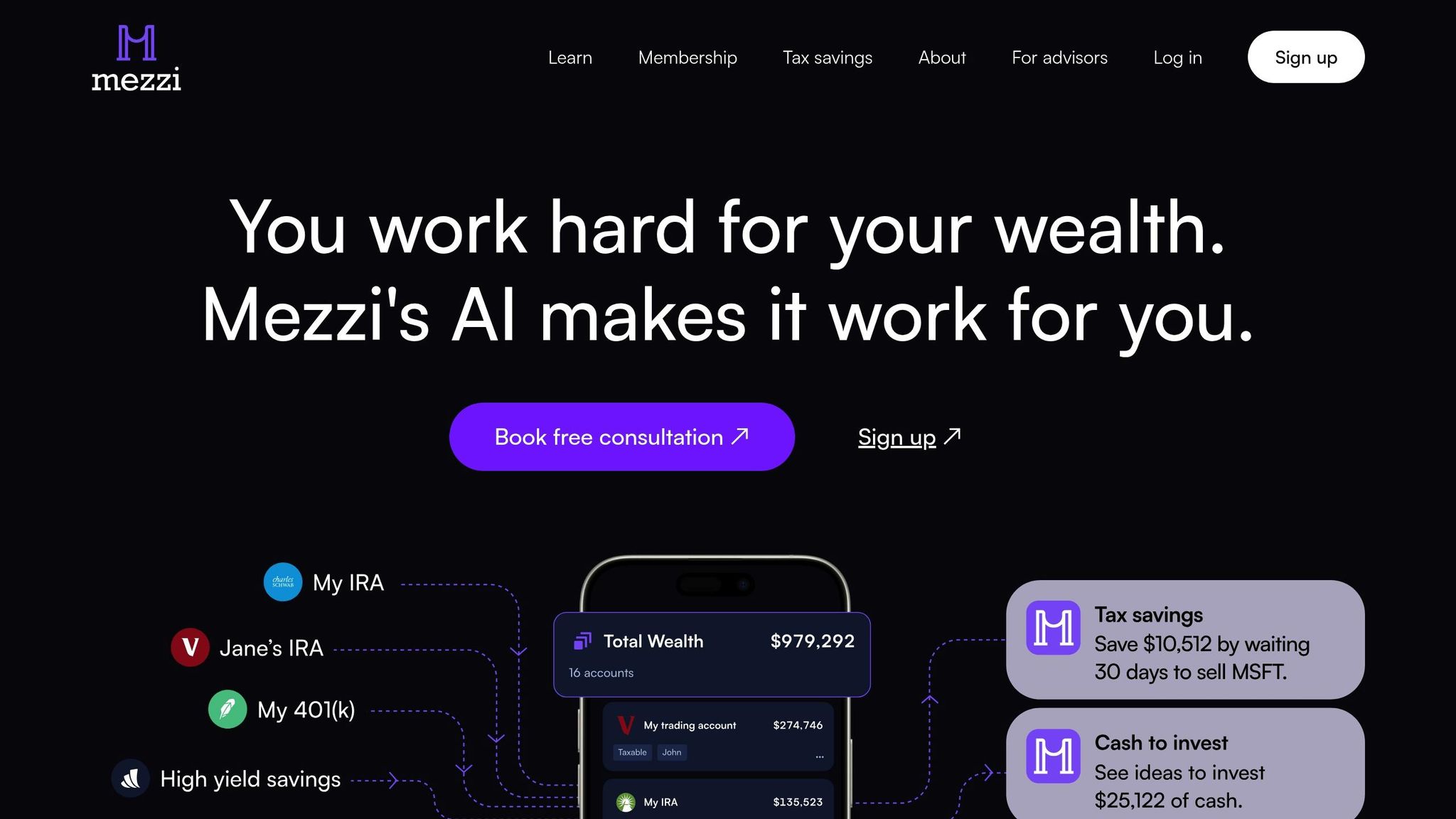
Mezzi’s platform takes rebalancing to a new level with its AI-powered tools. It provides real-time monitoring and offers a unified view of all financial accounts, making portfolio management seamless. One standout feature is its wash sale prevention system, which tracks transactions across accounts and warns users before they accidentally trigger tax penalties. Automated alerts also flag significant portfolio shifts, ensuring timely and efficient rebalancing.
Another powerful tool in Mezzi’s arsenal is the X-Ray feature. This function uncovers hidden exposures across accounts, helping investors identify concentration risks. By addressing these risks, the platform supports a more diversified and informed rebalancing strategy, even during volatile market conditions.
When combined with hedging strategies and dynamic glide paths, Mezzi’s AI tools form a comprehensive defense against market turbulence. This integrated approach strengthens wealth preservation efforts, offering a solid shield against financial uncertainty.
Alternative Assets: Beyond Stocks and Bonds
When stocks and bonds move in the same direction during market downturns, adding alternative assets to your portfolio can help spread out risk. These assets work alongside strategies like hedging, glide paths, and AI-driven rebalancing to create a broader safety net.
International Markets
Looking beyond U.S. borders can reduce dependence on domestic market performance. Investing in global equities and fixed-income securities can help steady your portfolio during turbulent times. However, international investing comes with its own challenges - currency fluctuations can chip away at returns. While currency hedging is one way to address this, it adds another layer of complexity. So, while international investments can lower overall risk, they also bring the added concern of currency volatility.
Digital Assets
Digital assets, like cryptocurrencies, are a relatively new option in the alternative investment space. Assets such as Bitcoin and Ethereum sometimes exhibit low correlation with traditional markets, making them appealing for diversification. However, their high volatility and speculative nature require careful consideration.
It's worth noting that hedging tools designed for U.S. markets - like S&P 500 put options - may not be as effective for portfolios with international exposure. By incorporating alternative assets, you can strengthen your portfolio's ability to weather market fluctuations, complementing both traditional and AI-powered strategies.
Conclusion: Building Crash-Resistant Portfolios
Creating a crash-resistant portfolio involves layering multiple strategies to tackle different risks. By combining tools like hedging with options, flexible glide paths, AI-powered rebalancing, and alternative investments such as international markets and digital currencies, you can build a robust defense against market declines. As MetricStream aptly put it:
"Every strategy listed here offers its unique fortitude to make organizations more risk-resilient, and, when used in tandem, these strategies could provide a foolproof shield against looming uncertainties." – MetricStream
Protective puts can cushion sudden market crashes, but they won't address risks that arise when a portfolio gradually becomes overexposed to riskier assets. Regular rebalancing ensures your investments stay aligned with your risk tolerance, while tailored glide paths help manage overall exposure. These defenses must adapt as market conditions evolve to remain effective.
Frequent reassessment is essential as your financial goals and risk tolerance shift over time. AI-powered tools simplify this process by continuously adjusting portfolio defenses, removing the need for constant manual oversight. Platforms like Mezzi offer advanced features, such as wash sale prevention across multiple accounts and AI-driven insights, enabling self-directed investors to implement multi-layered protection with ease. These dynamic adjustments help keep your portfolio resilient over the long term.
Different strategies excel under different conditions. For instance, Constant Proportion Portfolio Insurance (CPPI) can perform well in extended bear markets but may falter during short-term market reversals. On the other hand, a buy-and-hold approach might thrive in trending markets but lacks active protection in downturns. By integrating hedging, glide paths, AI-driven rebalancing, and alternative assets into a system of ongoing reassessment, you can build a portfolio designed to navigate a variety of market scenarios while staying aligned with your long-term objectives.
This layered approach ensures that when the next market downturn arrives, you’ll be ready.
FAQs
How do AI-powered tools improve glide paths and portfolio rebalancing strategies?
AI-driven tools are transforming how glide paths and portfolio rebalancing are managed. By processing massive amounts of market data in real time, these tools can spot trends and anticipate potential volatility. This enables more accurate portfolio adjustments, which play a key role in managing risk effectively.
On top of that, AI tailors strategies to fit each investor’s specific goals, risk tolerance, and time horizon. By automating these tasks, it not only boosts efficiency but also minimizes decisions driven by emotion, paving the way for more consistent long-term financial outcomes.
How do protective puts for individual stocks differ from index puts for market-wide protection?
Protective puts are a way to shield individual stocks from significant losses if their price takes a downturn. This strategy works well for investors who want to focus on protecting specific holdings within their portfolio.
On the flip side, index puts offer protection on a larger scale by hedging against declines in an entire market index, like the S&P 500. These are particularly helpful for those looking to reduce risks tied to broader market movements rather than the performance of individual stocks.
Deciding between these options comes down to your portfolio's makeup and whether your priority lies in safeguarding specific investments or addressing market-wide risks.
How can digital currencies and international markets enhance traditional hedging strategies in a diversified portfolio?
Diversifying your portfolio with digital currencies and international markets can provide an added layer of protection, especially during market downturns. Assets like cryptocurrencies or investments in global markets can help reduce dependency on domestic stocks and bonds, which are often more susceptible to local economic shifts.
One key advantage of these alternative investments is their tendency to show low or even negative correlations with traditional assets like stocks and bonds. In simpler terms, their performance often moves independently, offering a way to stabilize your portfolio during volatile times. That said, it's essential to weigh the risks and inherent volatility of these assets carefully. Make sure they align with your broader investment strategy and comfort level with risk.
Related Blog Posts
Table of Contents
Book Free Consultation
Walk through Mezzi with our team, review your current situation, and ask any questions you may have.