
Emerging markets offer high growth potential and portfolio diversification but come with risks like political instability, currency fluctuations, and trading challenges. For U.S. investors, these markets can act as a buffer against domestic market volatility and provide exposure to faster-growing economies like India, Brazil, and Vietnam. Historical data shows strong returns, with the MSCI Emerging Markets Index outperforming key global indices since 2000. However, risks such as inflation, lower liquidity, and complex tax rules require careful planning.
Key Takeaways:
- Growth Potential: Emerging economies are projected to contribute 65% of global GDP by 2035, with annual growth of 4.1%.
- Diversification: Lower correlation with U.S. markets can reduce portfolio risk.
- Risks: Political instability, currency volatility, and inflation can impact returns.
- Tax Complexity: Foreign tax credits and proper record-keeping are essential for U.S. investors.
- Investment Options: ETFs, ADRs, and AI tools like Mezzi simplify access and management.
If you're comfortable with higher risks and want to diversify your portfolio, allocating 5–15% to emerging markets could be a smart move. Tools like Mezzi can help manage these investments efficiently by offering advanced insights, tax-efficient asset allocation, and risk monitoring.
Investing in Emerging Markets: Worth the RISK?
Modern investors are also leveraging AI tools for emerging market investment analysis to gain real-time insights into these volatile regions.
Main Risks of Emerging Market Investments
While emerging markets present opportunities for growth, they also come with risks that can significantly affect your investment outcomes. Below are the primary challenges to consider when navigating these markets.
Political and Economic Problems
Political instability, such as abrupt government changes or unpredictable policy shifts, can disrupt markets and shake investor confidence. History is filled with examples of political unrest causing sharp declines in market performance.
Additionally, weaker legal systems in some emerging markets can complicate the enforcement of property rights and contracts, increasing the level of uncertainty for investors.
Economic issues like recessions or debt crises have also plagued many emerging economies. These challenges highlight the importance of conducting thorough research and employing careful risk management strategies when investing in these regions.
Currency Changes and Rising Prices
Currency volatility is a major concern in emerging markets. Sudden fluctuations in local currencies can erode gains when converted back to U.S. dollars, potentially offsetting strong local market performance.
Inflation is another pressing issue. High inflation rates can diminish the real value of your investments and reduce purchasing power over time. In some cases, governments may impose capital controls, restricting the ability to transfer profits out of the country.
These currency and inflation-related risks can add a layer of complexity to your investment strategy, making it crucial to monitor both local and global economic conditions.
Trading Difficulties and Different Rules
Trading in emerging markets often comes with unique challenges. Lower liquidity can make it harder to buy or sell assets quickly, especially during periods of market stress. This lack of liquidity can delay exits from underperforming investments, potentially compounding losses.
Regulatory environments in these markets are another hurdle. Financial reporting standards and disclosure requirements may be less stringent or inconsistent, adding to the difficulty of evaluating investments. Settlement processes can also be slower compared to the efficient systems in developed markets, tying up your capital for longer than anticipated.
Risk Comparison: Emerging vs. Developed Markets
A comparison of key risk factors highlights the differences between emerging and developed markets:
| Risk Factor | Emerging Markets | Developed Markets |
|---|---|---|
| Political Stability | Prone to rapid changes and unpredictability | Generally stable with consistent policies |
| Currency Volatility | High fluctuations impacting returns | Relatively stable exchange rates |
| Inflation Rates | Higher and more variable | Lower and more predictable |
| Market Liquidity | Often lower with wider bid-ask spreads | High liquidity and efficient trading systems |
| Regulatory Environment | Evolving and less consistent | Transparent and well-established frameworks |
| Economic Growth | More volatile and unpredictable | Steadier and more reliable |
Emerging market investments typically show greater price swings and deeper losses during downturns, as evidenced by volatility indicators and maximum drawdowns. These risks underscore the need for a well-thought-out approach when venturing into these markets.
Potential Returns and Portfolio Benefits
Emerging markets, while carrying certain risks, present opportunities that can add value to an investment portfolio. With the potential for faster growth and the ability to build a diversified portfolio, they remain an option worth exploring for U.S. investors. Let’s break this down further by examining growth drivers, diversification advantages, and performance patterns.
Higher Growth Potential
Emerging markets often outpace more developed economies in growth, thanks to factors like youthful populations, rapid industrialization, and urbanization. As people migrate to cities, the demand for infrastructure and consumer goods rises significantly. At the same time, the swift adoption of technology fuels growth in digital services and mobile platforms. Government spending on infrastructure further bolsters these economies, creating a foundation for sustained expansion.
Diversification Benefits for U.S. Investors
Incorporating emerging market investments into your portfolio can improve diversification. These markets often follow different economic cycles compared to the U.S., which can reduce overall portfolio risk. Additionally, their variety of currencies and industries - spanning everything from commodities to financial services - provides a broader range of exposure, enhancing the diversification effect.
Understanding Past Performance
While emerging markets have shown strong growth, they are also known for their volatility. However, these fluctuations can lead to significant gains during upward trends. Strategies like dollar-cost averaging can help manage the ups and downs by spreading out investments over time. Keep in mind, though, that past performance is not a guarantee of future results.
Using AI Tools to Improve Emerging Market Investing
Artificial intelligence has reshaped how investors tackle the challenges of emerging markets, making advanced analysis more accessible than ever. With modern AI-powered tools, investors can sift through massive amounts of data, uncover patterns, and gain actionable insights to navigate the often unpredictable terrain of emerging market investments.
Here’s how Mezzi’s suite of AI tools can enhance your investment strategy in emerging markets.
How Mezzi Supports Independent Investors
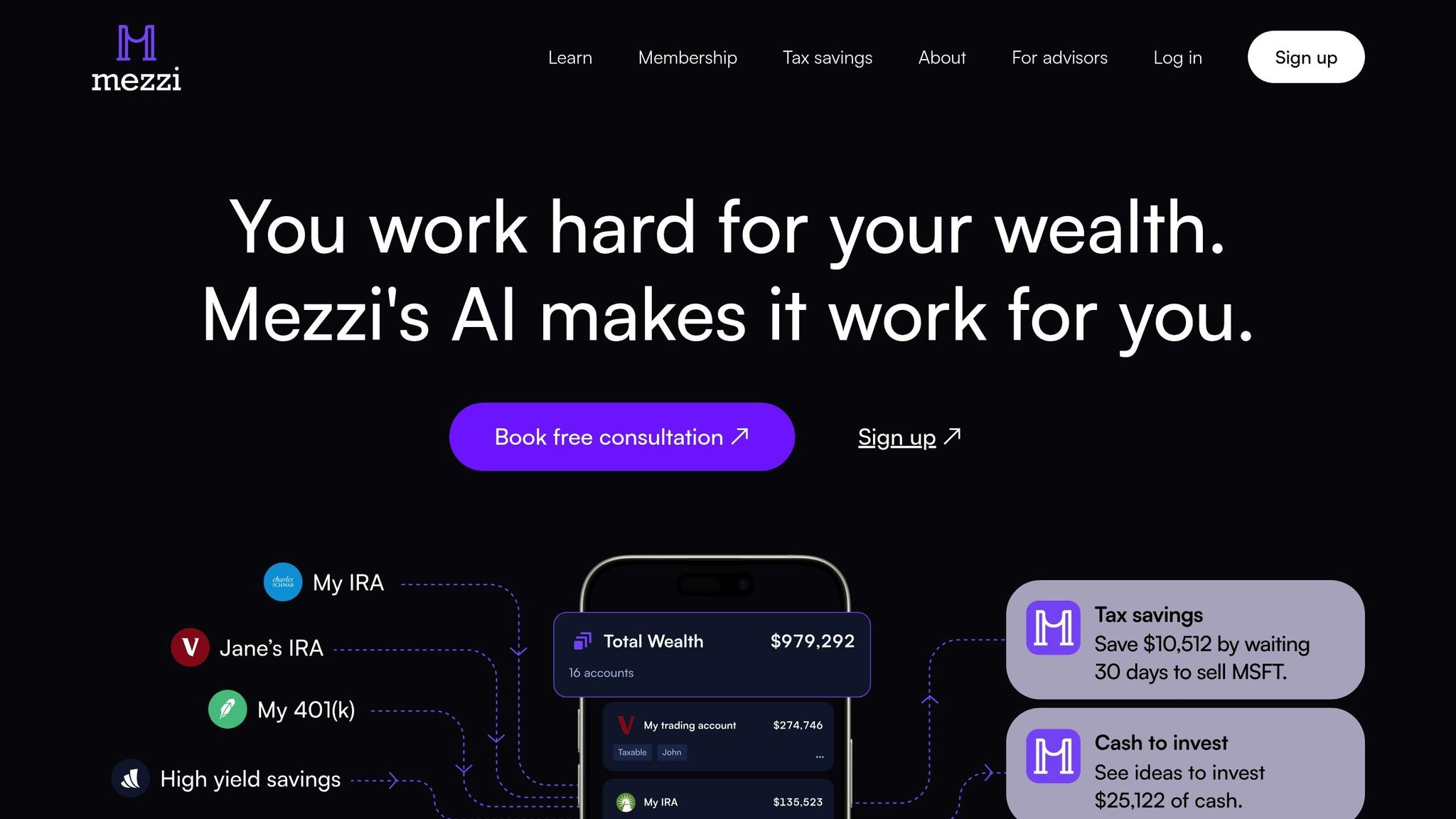
Mezzi’s AI-driven platform brings institutional-grade insights to individual investors. Its account aggregation feature lets you view all your investments in one place. This is especially useful when managing emerging market exposure spread across multiple accounts and brokers.
The platform’s X-Ray tool goes a step further, revealing hidden emerging market exposures in your portfolio. For example, it can identify if your domestic funds or ETFs include significant emerging market components. This helps you avoid unintentional over-concentration in specific regions or sectors.
Emerging market investments often come with complex tax implications, and Mezzi’s AI tax optimization tools simplify this. The platform helps you navigate wash sales across multiple accounts and suggests tax-saving strategies. Given the volatility of emerging markets - which can lead to frequent buying and selling - this guidance is key to preserving your after-tax returns.
These tools also address risks unique to emerging markets, including political instability, currency fluctuations, and liquidity challenges.
Identifying Market Trends and Opportunities
Emerging markets are influenced by a mix of political events, currency movements, economic indicators, and global trade dynamics. This creates a flood of data that AI can process to uncover investment opportunities. Mezzi’s AI provides real-time alerts, notifying you of potential risks or opportunities in your holdings.
Need clarity on a specific trend? Mezzi’s 24/7 AI chat support is there to answer your questions, explain market movements, and offer personalized insights tailored to your portfolio. Instead of spending hours researching individual countries or sectors, you can quickly get a clear picture of how global events might impact your investments.
The platform also includes risk discovery tools to flag potential vulnerabilities. For example, it can highlight excessive concentration in a single country, currency mismatches that don’t align with your risk tolerance, or holdings that may be too closely correlated during market downturns.
How AI Enhances Portfolio Management
Mezzi doesn’t just help you spot risks and trends - it also streamlines portfolio management. Traditionally, handling emerging market investments required significant expertise and effort. Mezzi’s AI simplifies decision-making with performance analysis, showing how each holding impacts your overall portfolio.
The Financial Calculator integrates factors like your current portfolio value, projected contributions, expected returns, and fees to provide a realistic look at your long-term financial goals. This tool is especially valuable for emerging market investors, where higher potential returns often come with increased volatility and costs.
For those seeking a more personalized experience, Mezzi offers its White Glove Membership at $499 per year. This premium service includes unlimited AI coaching calls, giving you tailored advice on emerging market allocation, sector exposure, and timing. With access to cutting-edge AI models and priority support, you’ll have the tools to make informed decisions about complex investments.
Mezzi’s commitment to an ad-free, privacy-focused design ensures that recommendations are based solely on your financial profile. This is particularly important in emerging markets, where biased advice can lead to poor decisions, often favoring high-fee products over what’s best for your portfolio.
Tax Rules and Low-Cost Investment Methods
Navigating the complexities of emerging markets requires more than just understanding risks - it also means tackling unique tax regulations. For U.S. investors, this can be a challenge, but with the right strategies and tools, you can minimize costs and stay compliant with IRS requirements.
Tax Rules for U.S. Investors
Investing in emerging markets often comes with foreign tax withholding on dividends and capital gains. Many countries automatically deduct taxes from dividend payments, which can eat into your returns. However, the foreign tax credit allows you to offset these taxes on your U.S. tax return, provided you maintain thorough records and proper documentation.
When it comes to capital gains, the tax treatment depends on the type of investment. Holding emerging market ETFs or mutual funds for over a year qualifies for long-term capital gains rates, which are generally lower. On the other hand, direct stock investments can be more complicated due to the impact of currency fluctuations.
Understanding tax on foreign investment income is essential, and this is where Mezzi’s tools come into play to help reduce liabilities and streamline your investment strategy.
Using Mezzi to Reduce Your Tax Bill
Mezzi’s tax optimization tools are designed to simplify the challenges of investing in emerging markets. One key feature is its ability to help you avoid wash sales across multiple accounts. This is especially useful when managing volatile investments, where frequent trades might unintentionally trigger the wash sale rule, resulting in disallowed losses. Mezzi tracks all your transactions, ensuring compliance and preventing costly errors.
The platform also enables account aggregation, giving you a clear view of your emerging market exposure across all accounts. This holistic perspective lets you make smarter decisions, such as holding income-focused funds in tax-advantaged accounts while placing growth-oriented investments in taxable accounts to maximize efficiency.
Additionally, Mezzi provides actionable insights, such as guidance on timing sales to qualify for long-term capital gains rates and coordinating rebalancing activities across accounts. These features can help you significantly reduce your tax burden and improve overall portfolio performance.
Beyond tax strategies, choosing cost-effective investment options is another way to enhance your portfolio’s efficiency.
Low-Cost Investment Options
Emerging market ETFs are a popular choice for gaining exposure to developing economies. They offer diversification and come with low transaction costs. Another option is investing in direct stocks through U.S. exchanges. Many leading companies from emerging markets are available as American Depositary Receipts (ADRs), which can simplify tax reporting and reduce foreign exchange fees.
Here’s a quick comparison of investment methods:
| Investment Method | Annual Fees | Setup Costs | Tax Complexity |
|---|---|---|---|
| Emerging Market ETFs | Low expense ratios | $0 | Low |
| Direct ADR Stocks | Varies per trade | $0 | Medium |
| Actively Managed Funds | Higher expense ratios | $0 – $50 | Medium |
| Traditional Financial Advisor | 1.0%–1.5% annually | $0 – $500 | Low (handled for you) |
| Mezzi Platform | $199 – $499 annually | $0 | Low (AI-assisted) |
Mezzi’s AI-driven approach offers an affordable alternative to traditional advisors. For example, the Build Wealth Faster Membership, priced at $199 annually, provides advanced insights and analysis tailored to managing emerging market investments. For those seeking more personalized support, the White Glove Membership at $499 per year includes unlimited AI coaching calls and 24/7 access to advanced analysis tools.
Additionally, modern brokers now offer fractional share investing, allowing you to allocate your portfolio with precision and without requiring significant upfront investments. This flexibility makes it easier than ever to build a well-diversified portfolio in emerging markets while keeping costs low.
Should You Invest in Emerging Markets?
Deciding whether to invest in emerging markets comes down to your financial goals and how much risk you're comfortable taking on.
Key Considerations for U.S. Investors
Emerging markets, like those in India, Brazil, and Vietnam, present opportunities for rapid growth that developed markets often can't match. These regions can deliver substantial returns but come with challenges like political instability, currency fluctuations, and liquidity issues that can quickly diminish gains.
Investing in emerging markets can also diversify your portfolio. When U.S. markets take a hit, exposure to other regions may help balance out the volatility - especially appealing for long-term investors looking to smooth out market ups and downs.
However, the tax side of foreign investments can get tricky. Issues like foreign withholding taxes and currency gain calculations add layers of complexity. While tools like the foreign tax credit can help, they require careful record-keeping and a solid understanding of tax rules.
For most U.S. investors, allocating 5–15% of your portfolio to emerging markets can be a reasonable middle ground. More conservative investors might stick closer to 5%, while those with a higher tolerance for risk could consider leaning toward the upper end of that range.
Managing the risks and complexities of emerging market investments requires the right tools.
Leveraging Mezzi's Features for Emerging Markets
Navigating the challenges of emerging market investing becomes far easier with advanced tools, and that's where Mezzi's AI-driven platform shines. It’s designed to empower independent investors managing complex portfolios.
One standout feature is account aggregation. This tool gives you a complete view of your exposure to emerging markets across all your investment accounts, helping you avoid over-concentration in specific regions or sectors. By centralizing this information, you can maintain proper diversification without the hassle of switching between platforms.
tax-loss harvesting strategies are another essential component. Mezzi helps you avoid wash sales across multiple accounts, potentially saving you thousands in disallowed losses. The platform also offers insights to help you time your trades for maximum tax advantages, simplifying the often-daunting tax strategy for foreign investments.
The X-Ray feature is particularly valuable for emerging market investors. It digs into ETFs and mutual funds to reveal hidden exposures to specific countries or companies. This insight helps you steer clear of unintended concentration risks that could magnify losses during regional downturns.
For $199 annually, the Build Wealth Faster Membership offers advanced AI-driven insights and unlimited chat support tailored to analyzing emerging market opportunities. If you're looking for more personalized guidance, the White Glove Membership at $499 per year includes unlimited AI coaching calls and priority support. It’s a cost-effective alternative to traditional advisory services, giving you the tools to make informed decisions without breaking the bank.
Mezzi also provides real-time AI alerts to keep you informed about major developments affecting your emerging market investments - whether it’s a political shift, currency movement, or economic event. These updates allow you to respond quickly and stay ahead of potential risks.
FAQs
What are the key advantages of investing in emerging markets over developed markets?
Investing in emerging markets presents the chance for greater growth potential than what's typically seen in developed markets. Many of these economies are expanding quickly, thanks to factors like rising populations, increasing consumer demand, and major infrastructure projects. Over time, these dynamics can translate into stronger investment returns.
Another key benefit is diversification. Emerging markets often move independently of U.S. stocks, which can help lower overall portfolio risk and provide stability during market ups and downs. For those aiming to achieve long-term growth while maintaining a well-balanced portfolio, emerging markets offer an opportunity worth considering.
How can U.S. investors navigate risks like currency fluctuations and political instability when investing in emerging markets?
U.S. investors looking to navigate currency risks in emerging markets can benefit from spreading their investments across a variety of currencies. Another smart move is to explore funds that incorporate currency hedging, which helps reduce exposure to exchange rate fluctuations. These steps can act as a safeguard against unexpected shifts in currency values that might affect overall returns.
When it comes to political instability, staying informed about global events is crucial. Prioritizing investments in countries with relatively stable political climates can provide some peace of mind. Additionally, spreading investments across multiple regions can help cushion the impact of instability in any one area. For those seeking extra security, political risk insurance might be worth considering for specific investments.
By blending these tactics, you can strike a better balance between potential rewards and the risks that come with investing in emerging markets, keeping your portfolio aligned with your financial objectives and comfort level with risk.
How does AI make investing in emerging markets easier, and how can Mezzi help with this?
AI has made investing in emerging markets much more accessible by processing massive data sets with speed and precision. It identifies trends and uncovers opportunities that might slip under the radar, helping investors make sense of these often complex markets. By offering actionable insights, AI significantly cuts down the time spent on research.
Mezzi's tools take this a step further by using AI to provide real-time insights, craft personalized diversification strategies, and manage risks efficiently. These features give individual investors the confidence to make well-informed, data-backed decisions that align with their financial goals and risk levels.
Related Blog Posts
Table of Contents
Book Free Consultation
Walk through Mezzi with our team, review your current situation, and ask any questions you may have.